
Belém, Brazil, 14 November 2025,
The dialogue at the Indonesia Pavilion has evolved from defining problems to architecting comprehensive solutions. In a series of sessions spanning the Science Panel for Borneo, indigenous rights, tropical forest finance, and heavy industry decarbonization, a clear message emerged : saving the planet requires a whole of society synchronization. From the liberation of data by scientists to the green democracy of the senate, and from the circular economy of nickel mines to the methane management of energy giants, here is the deep-dive recap of a pivotal day at COP30.
Here are the sessions of fifth day, 14 November 2025 in Indonesia Pavilion :
1. Strengthening Indigenous People and Local Communities in Forest Area to Increase Economic Benefit (I2 Session)
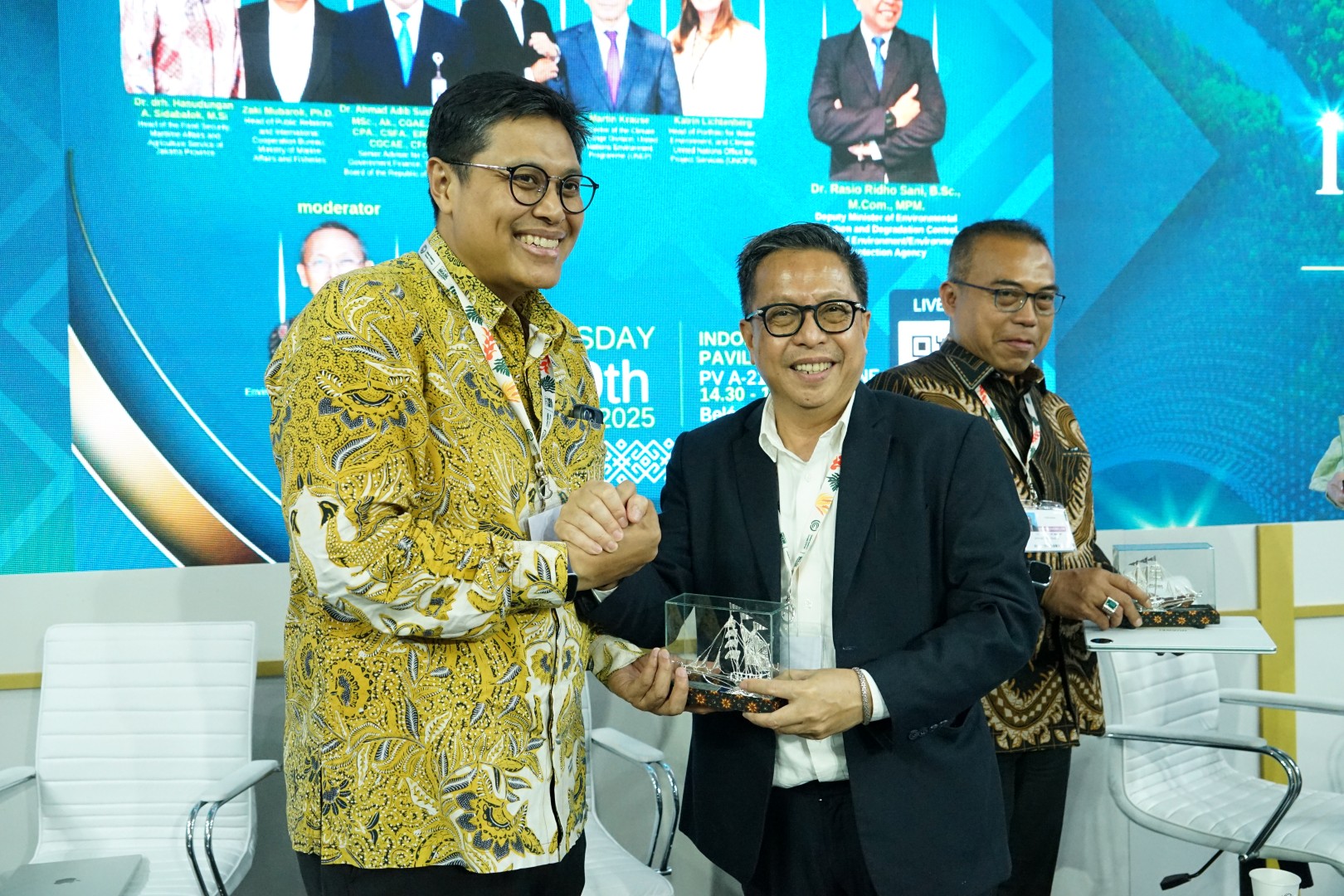
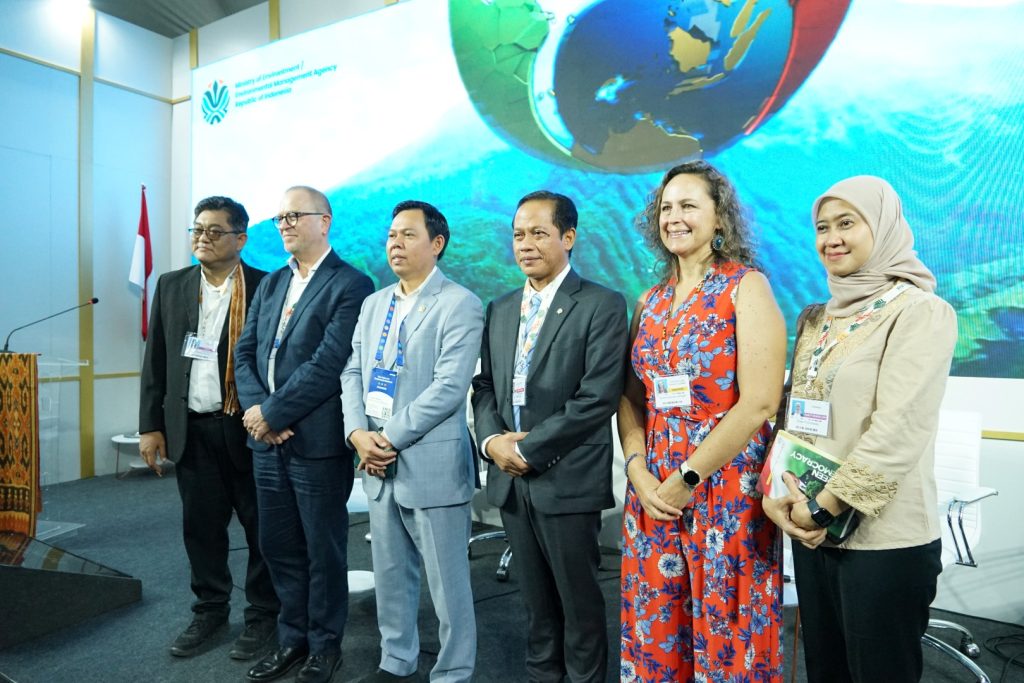
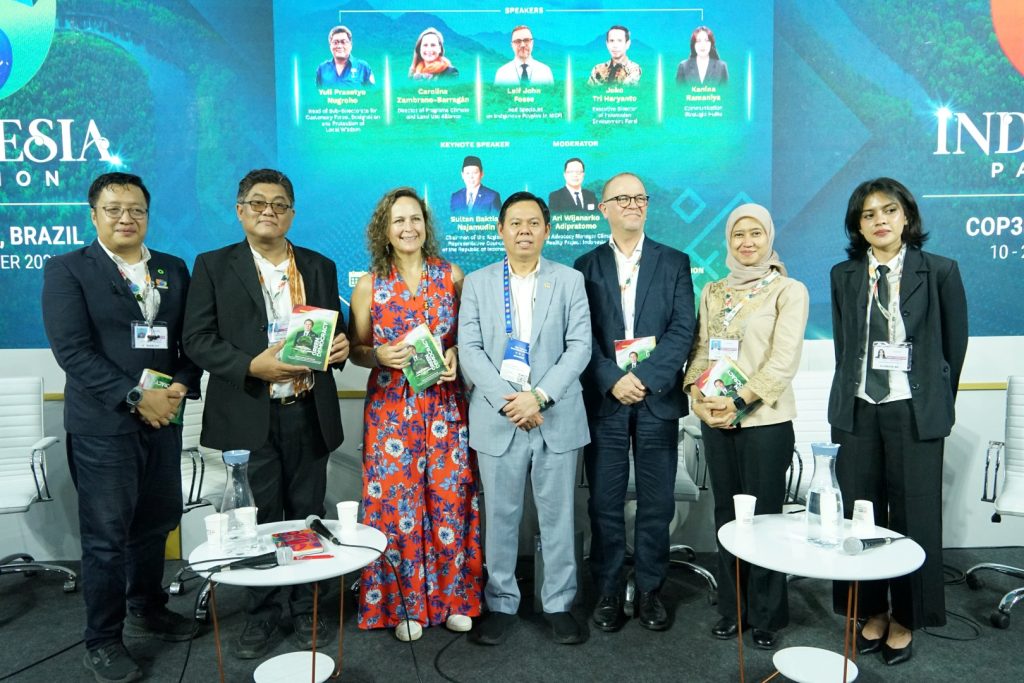
Science and funding mean nothing without the people on the ground. Session I2 shifted the spotlight to Indigenous Peoples and Local Communities (IPLC). H.E. Sultan Baktiar Najamudin, Chairman of the Regional Representative Council (DPD RI), introduced the concept of Green Democracy, arguing that political innovation must be pro ecosystem. He announced three draft laws, including the Protection of Indigenous Peoples, stating that indigenous communities don’t view forests as assets for exploitation, but as a life giving universe.
Economic Empowerment Rights must be backed by capital. Endah Tri Kurniawati from the Indonesia Environment Fund (BPDLH) revealed a game changing financial instrument, revolving funds with a low interest rate of 3% for social forestry groups. This facility has already reached 50,000 beneficiaries, proving that Indonesia is ready to help on its people. International partners like Leif John Fosse (NICFI) validated this approach, citing data that deforestation is substantially lower where indigenous rights are recognized.
2. Science & Nature: The Foundation of Integrity (Sessions SS7 and B10)
The session began with a stark reality check from the scientific community in Session SS7 (Safeguarding Borneo’s Future: Findings and Pathways from the Science Panel). The Science Panel for Borneo (SPB) did not mince words about the urgency of the situation. Prof. Emma Torres from UN SDSN framed the tropical forests of Borneo, Amazon, and Congo not merely as local resources, but as “indispensable infrastructure” for the global economy. Supporting this, Prof. Yuen Yoong Leong proposed a “Borneo Sustainability Accord,” advocating for a paradigm shift where soil is treated as capital asset rather than a resource to be exploited.
Prof. Daniel Murdiyarso from the Indonesian Academy of Sciences delivered one of the day’s most potent challenges. He urged scientists to stop hoarding information for academic journals and instead liberate data immediately to the media and public, noting that deforestation moves faster than peer review cycles.

Nature and Climate Action: Conserving Tropical Forest for Ecosystem Services and Climate (Session B10) provided the answer for the question about how do we pay for the forest preservation through the Tropical Forest Forever Facility (TFFF). Andre Aquino from Brazil’s Ministry of Environment introduced this revolutionary USD 125 billion mechanism. Unlike complex carbon markets, TFFF proposes a simpler logic, paying tropical nations for the value of standing forests, creating an asset class that incentivizes conservation simply because the forest exists.
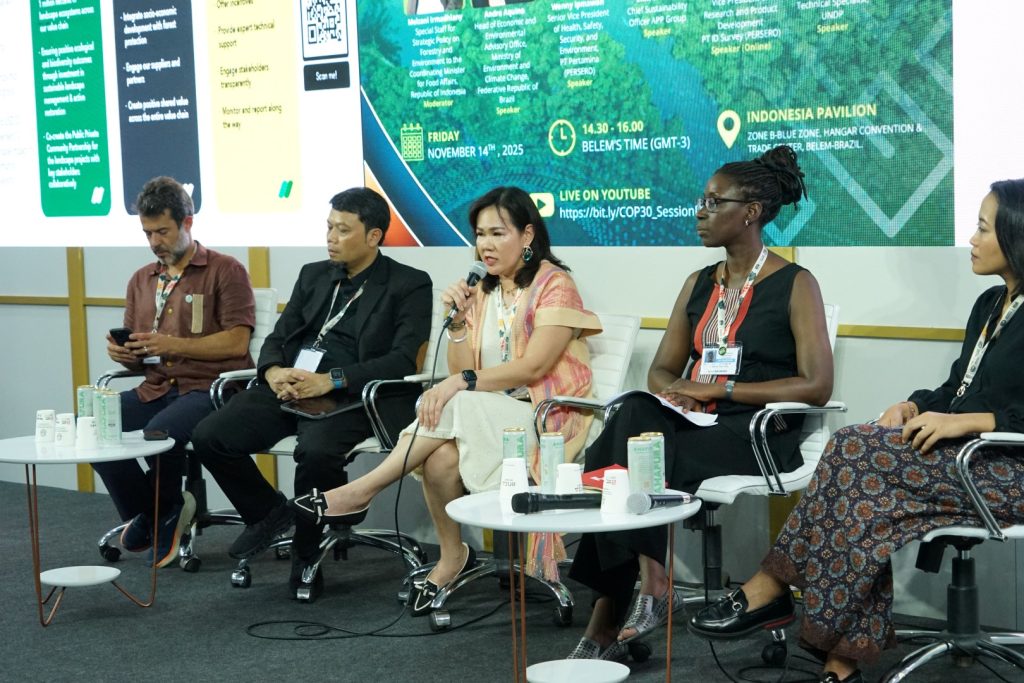
Indonesia proved this model works. H.E. Nani Hendiarti highlighted that Indonesia has successfully reduced deforestation to historic lows while maintaining economic growth, a sentiment echoed by UAE representatives who praised the collaborative mangrove research between the two nations.
3. Industrial Transformation : Nickel and Methane (Sessions E1 and D2)
The session then pivoted to the hard to abate sectors, demonstrating that heavy industry is not the enemy, but a partner in transition.
Emerging Technologies to respond to Climate Change in Indonesia’s Nickel Downstreaming Industry (Session E1) As the world looking for Indonesia’s nickel for EV batteries, Session E1 showcased how the industry is cleaning up its act. Amelia Rachmatunisa from the Ministry of Environment explained the policy shift to treat waste as a resource. This was exemplified by Harita Nickel turning slag into construction bricks and artificial reefs.
Technological Leap: Huayou Indonesia presented their HPAL Technology and a 62-km Slurry Pipeline that replaces trucks, cutting carbon emissions by approximately 60%. PT Vale Indonesia emphasized that “there is no mining without caring for the future” backing this up with 365 MW of hydroelectric power for their operations.
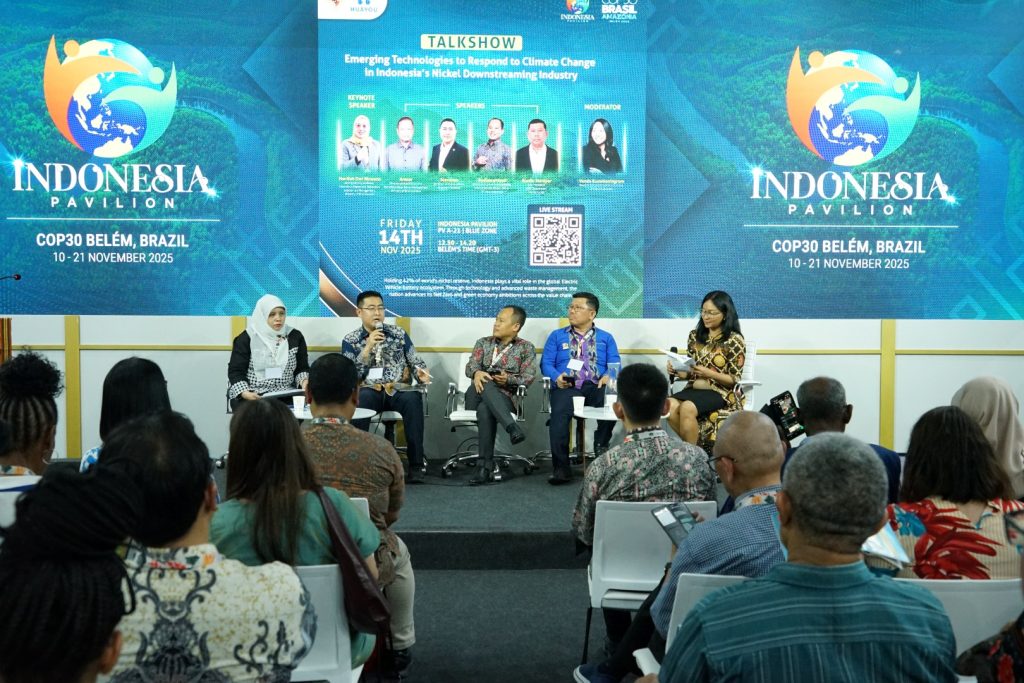
Emerging Technologies to respond to Climate Change in Indonesia’s Nickel Downstreaming Industry (Session E1)
Session D2 addressed methane as the fast acting greenhouse gas. Nani Hendiarti emphasized that cutting methane is a strategic necessity.
Global Partnerships: The session highlighted the CLEAN Initiative by JOGMEC, which provides risk money and technical support for methane reduction in LNG projects. Pertamina demonstrated its commitment to the Global Methane Pledge by deploying drones and OGI cameras to detect leaks, aiming for a 40% reduction in emissions by 2030.

The message from Day 5. These five sessions paint a portrait of a maturing climate ecosystem in Indonesia. It is a system where scientists liberate data for policy, indigenous guardians are funded by the state, and industries deploy advanced tech to close the loop. Indonesia is proving that economic complexity and ecological integrity can, and must, coexist.