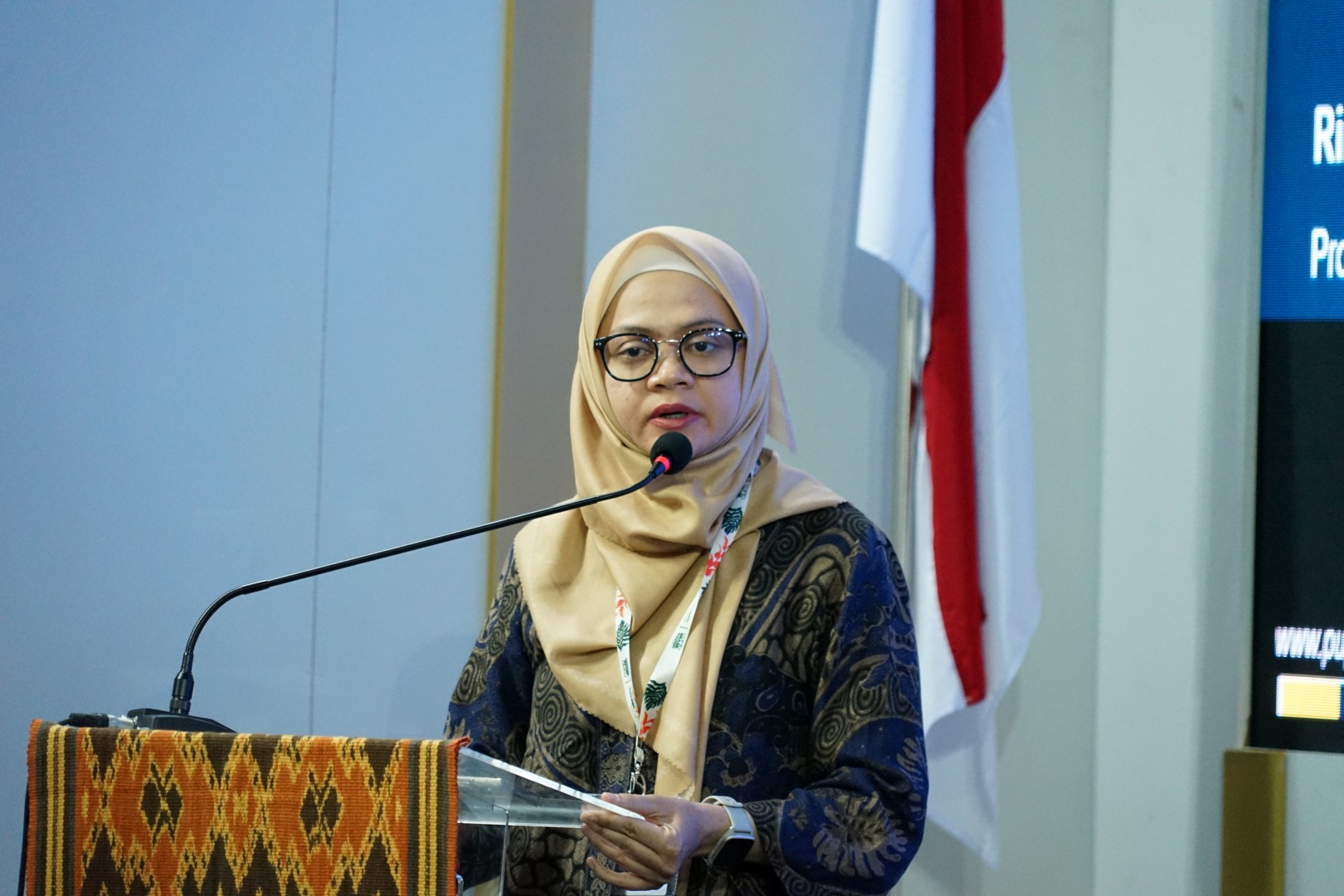
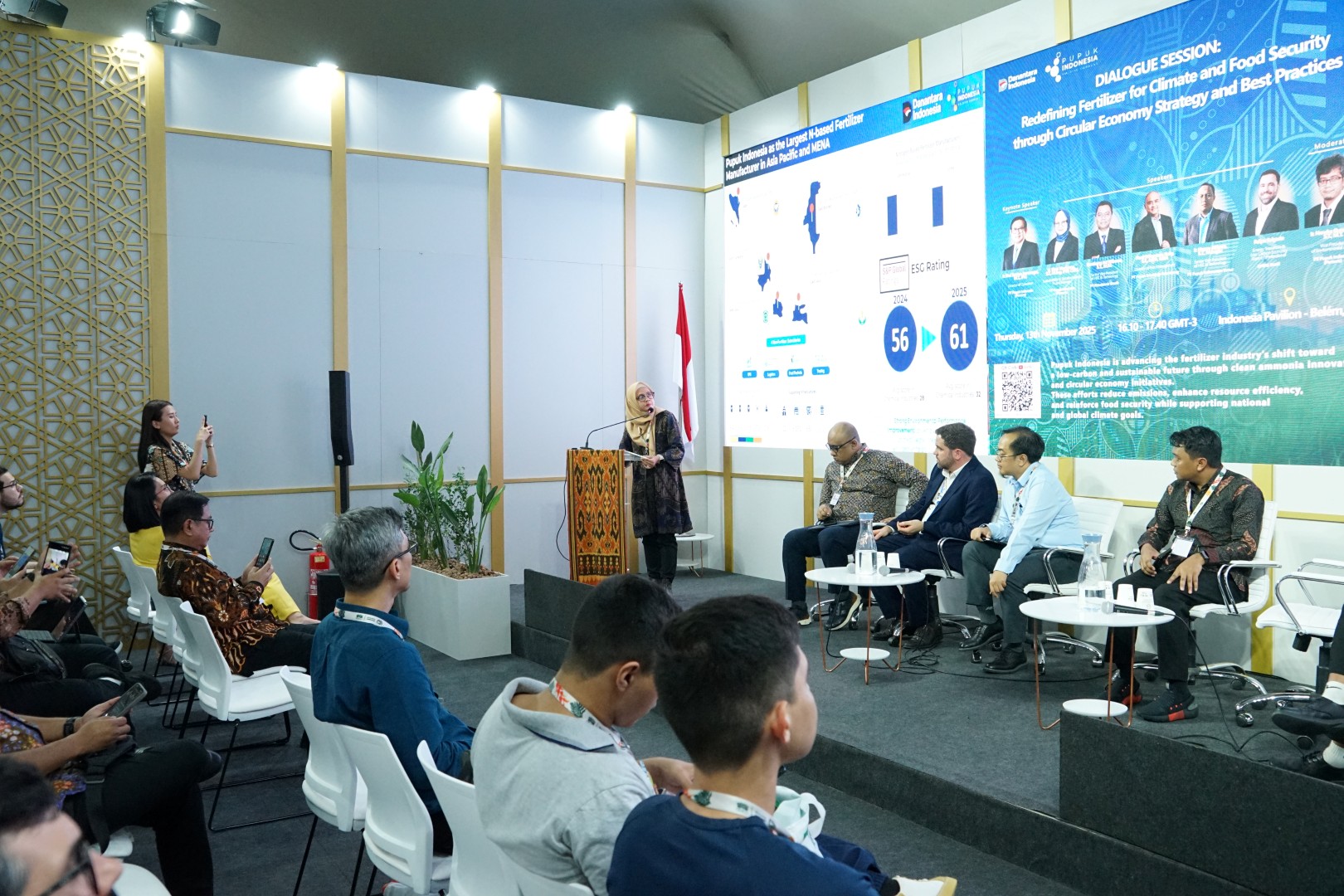
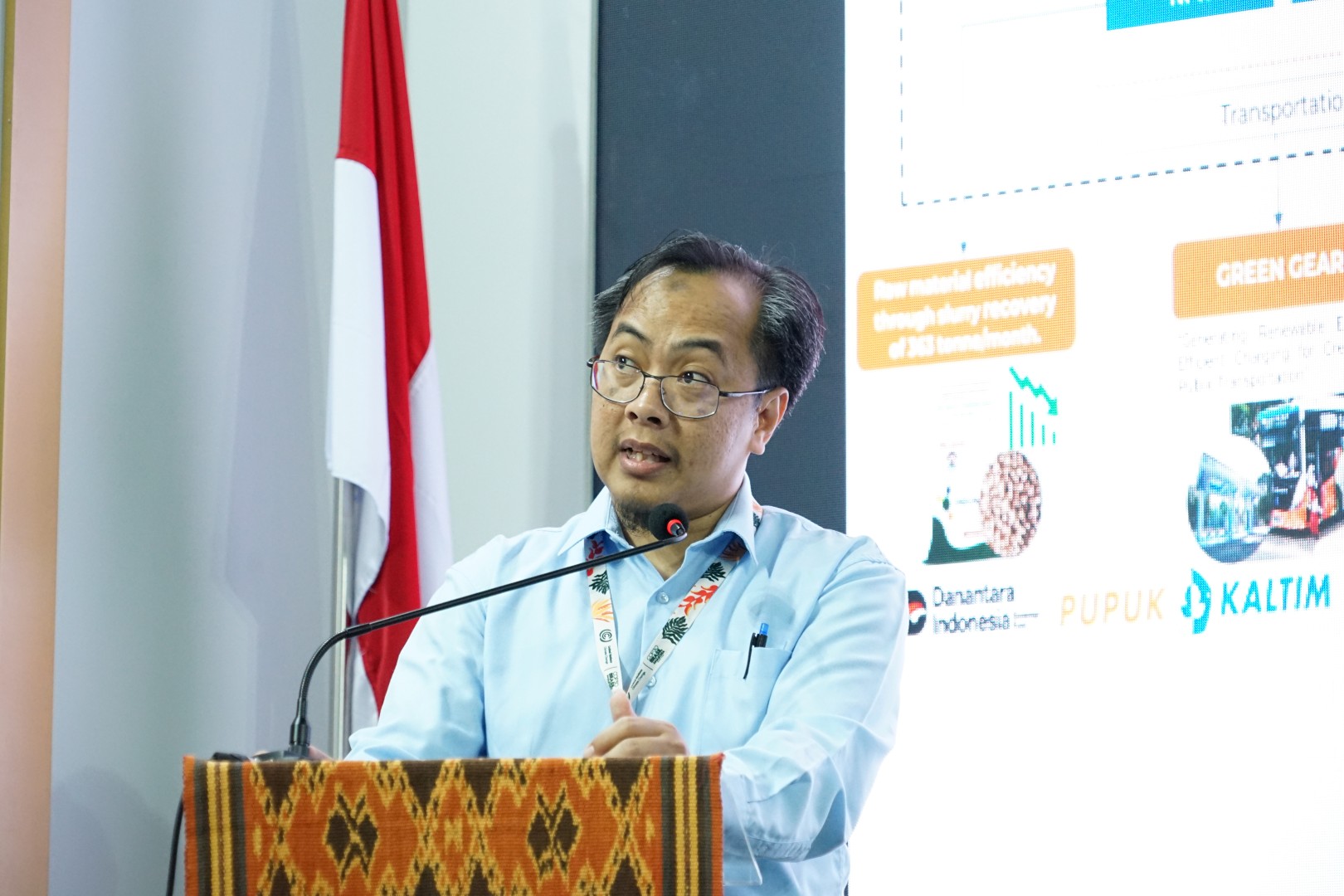
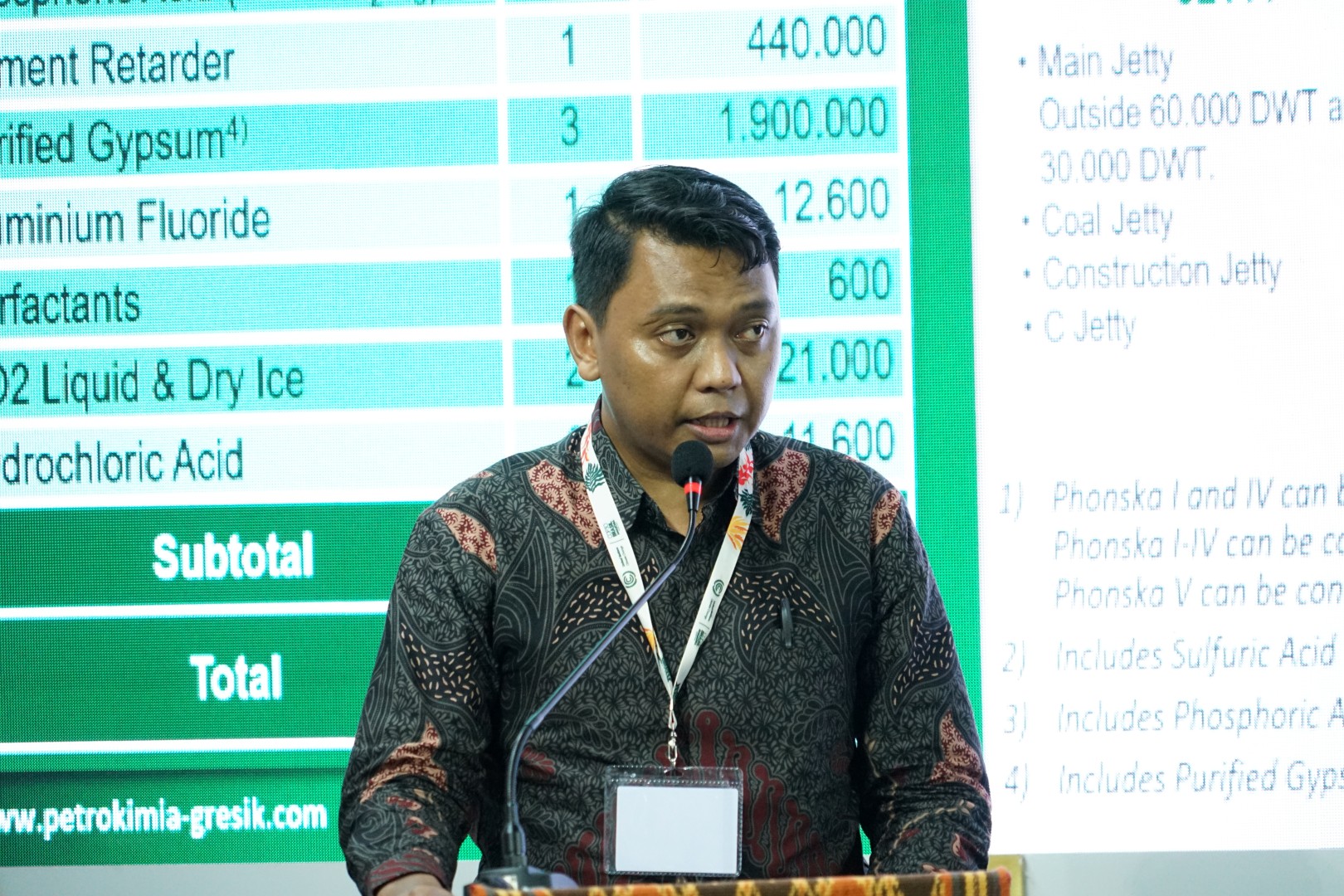
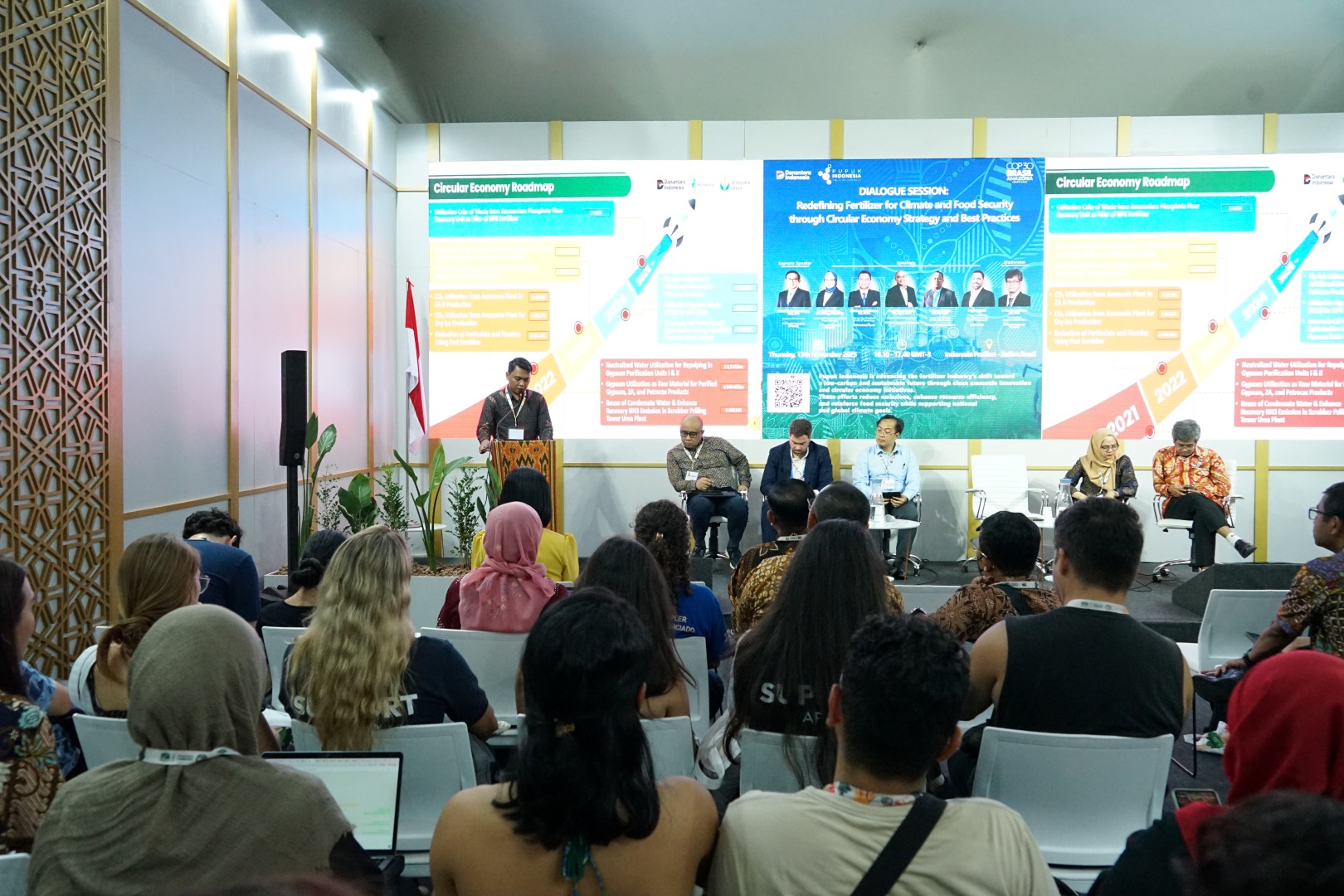
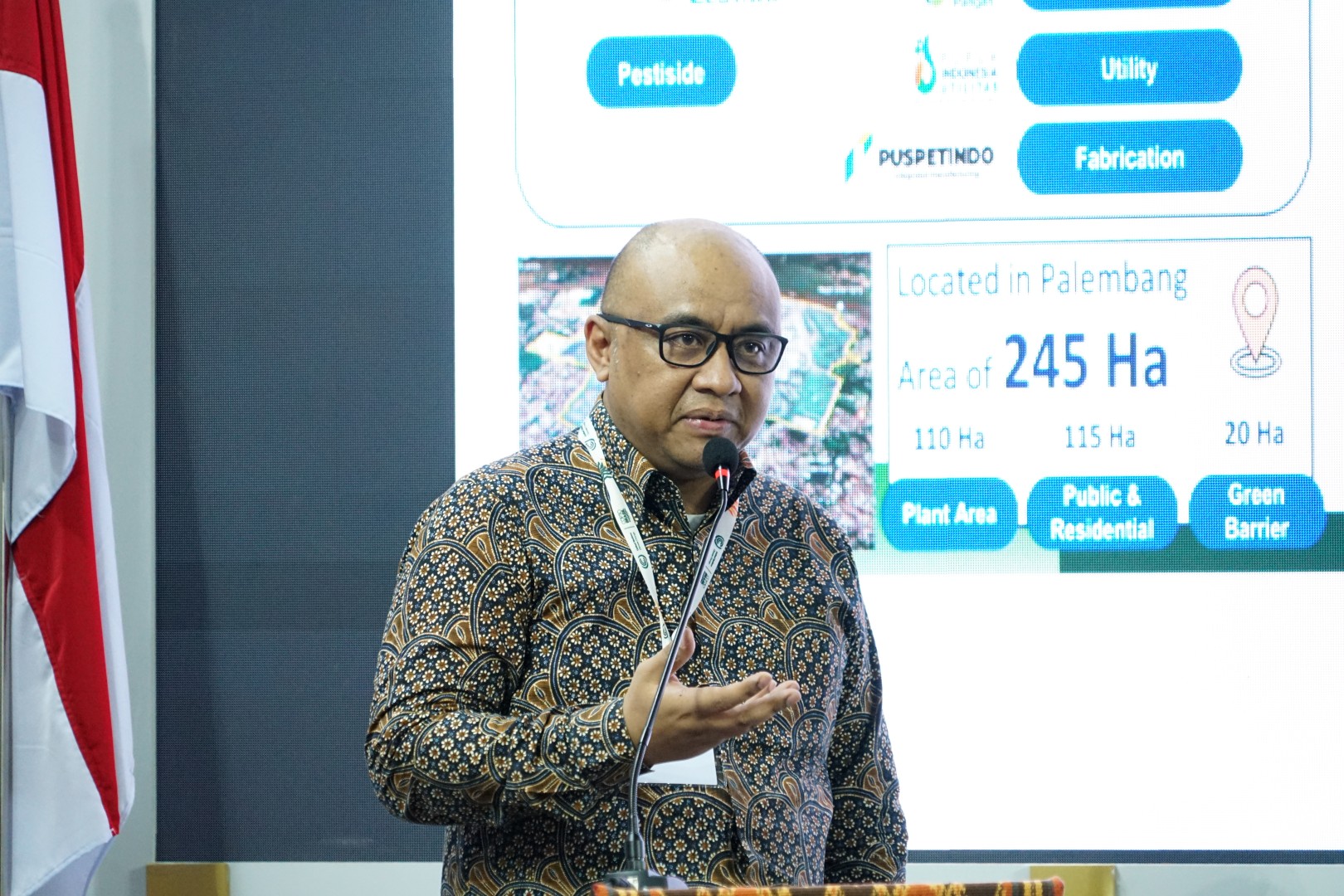
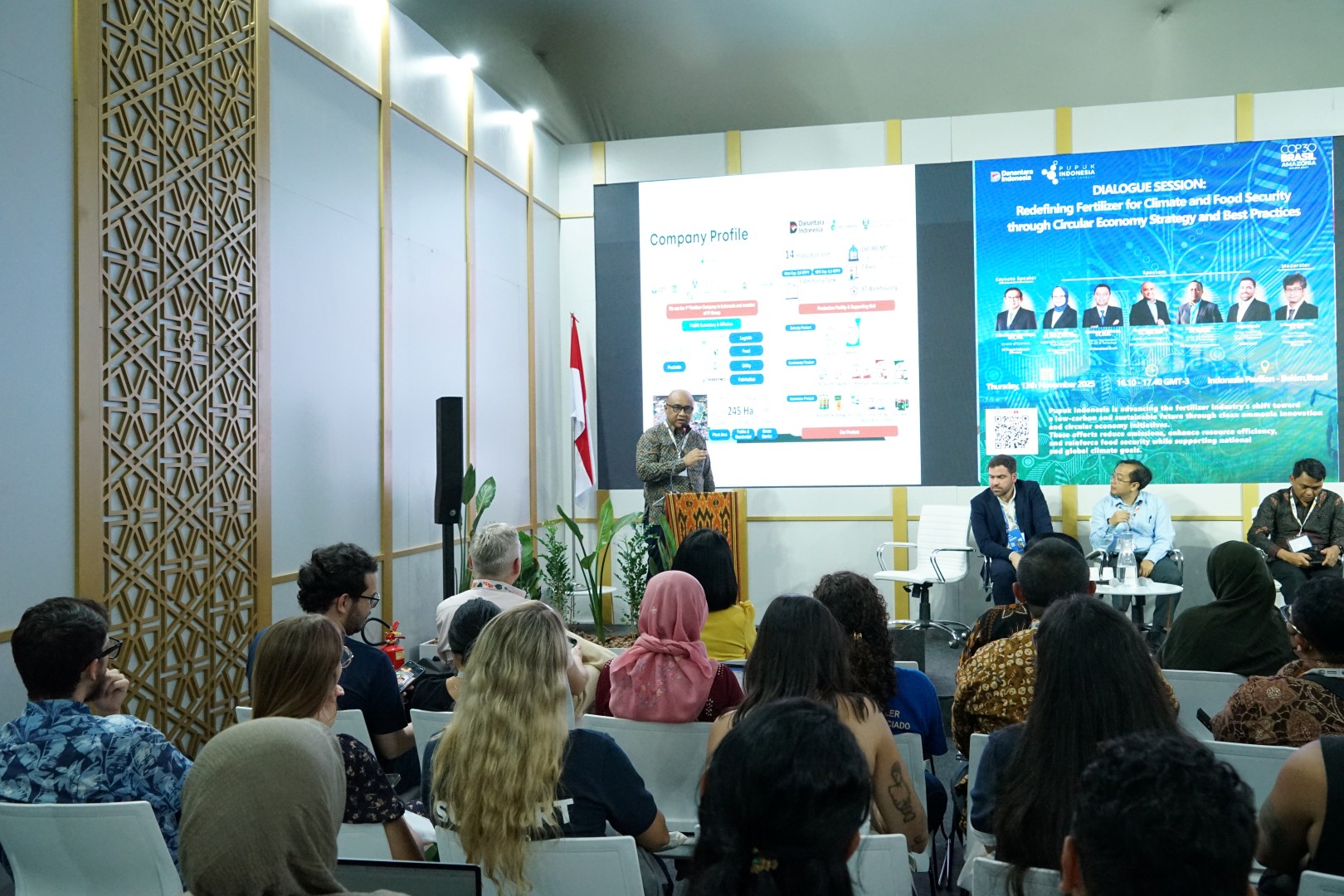
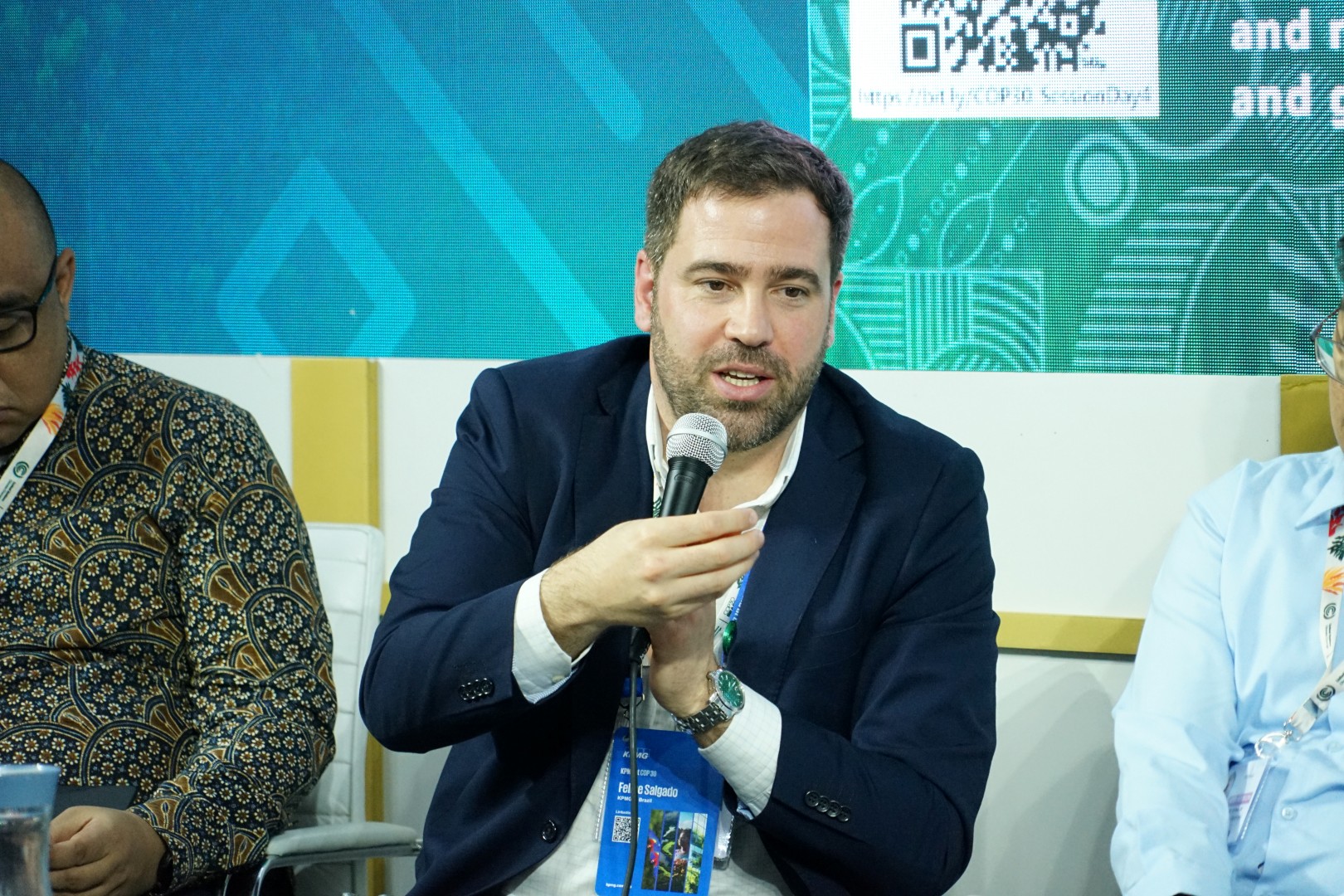
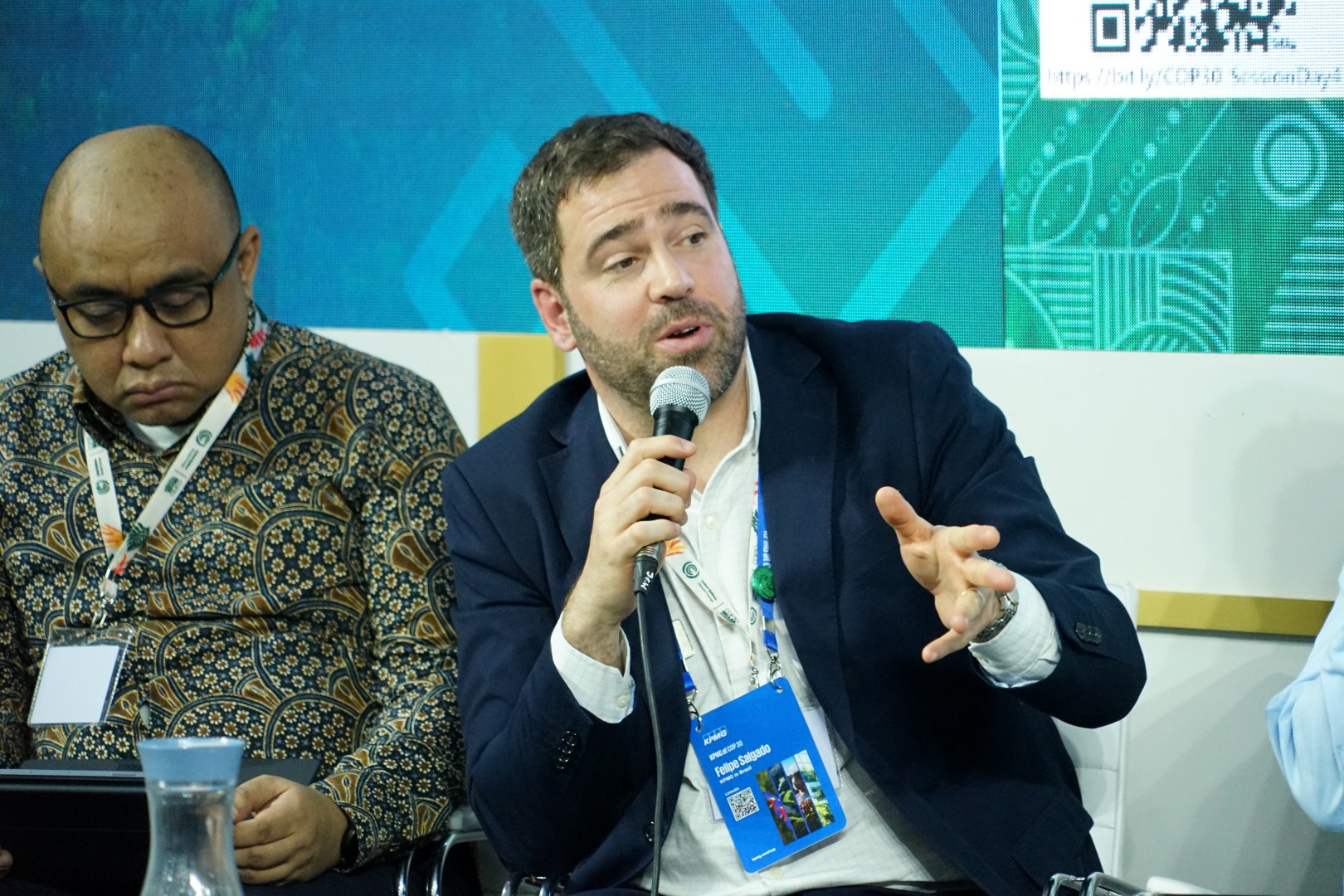
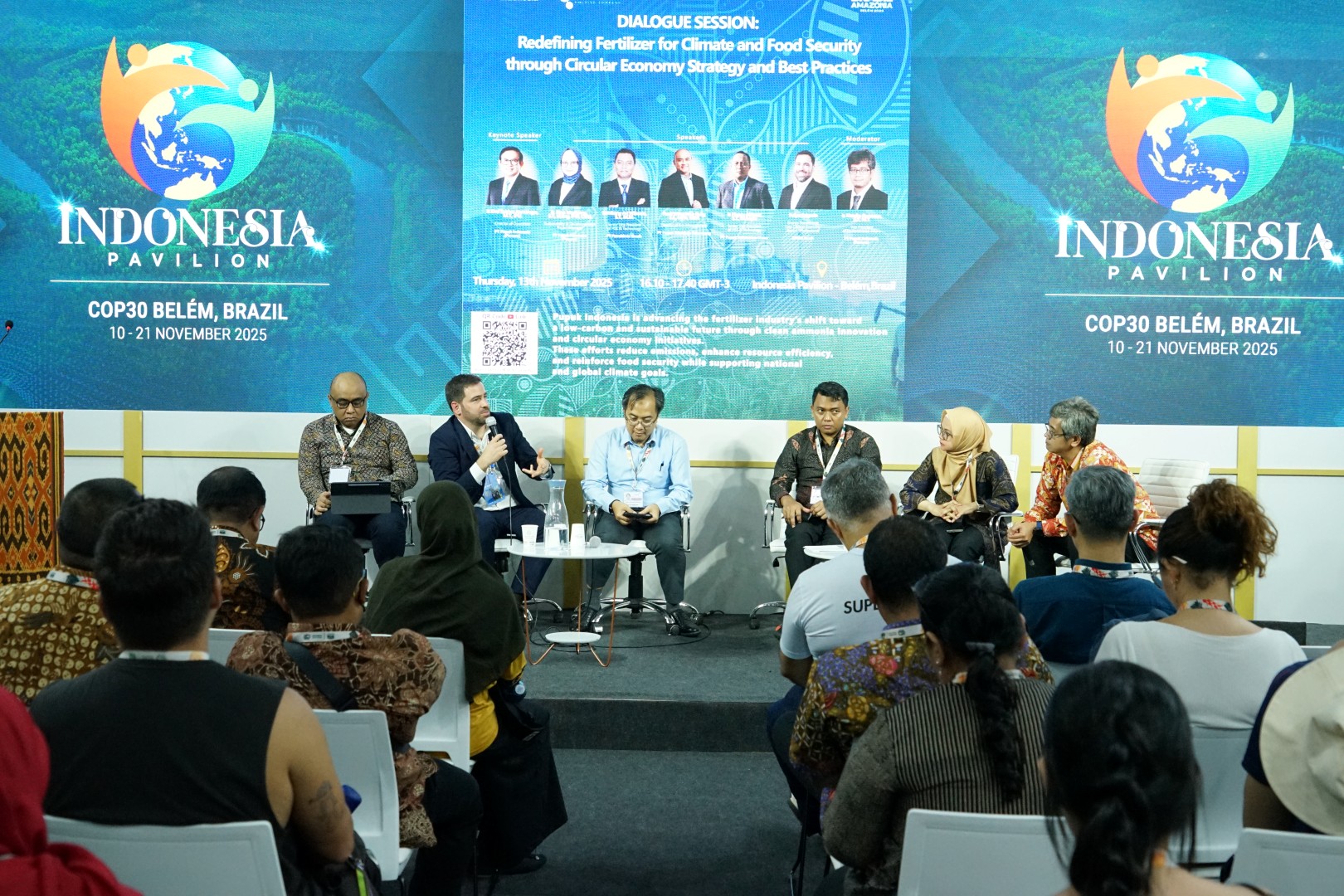
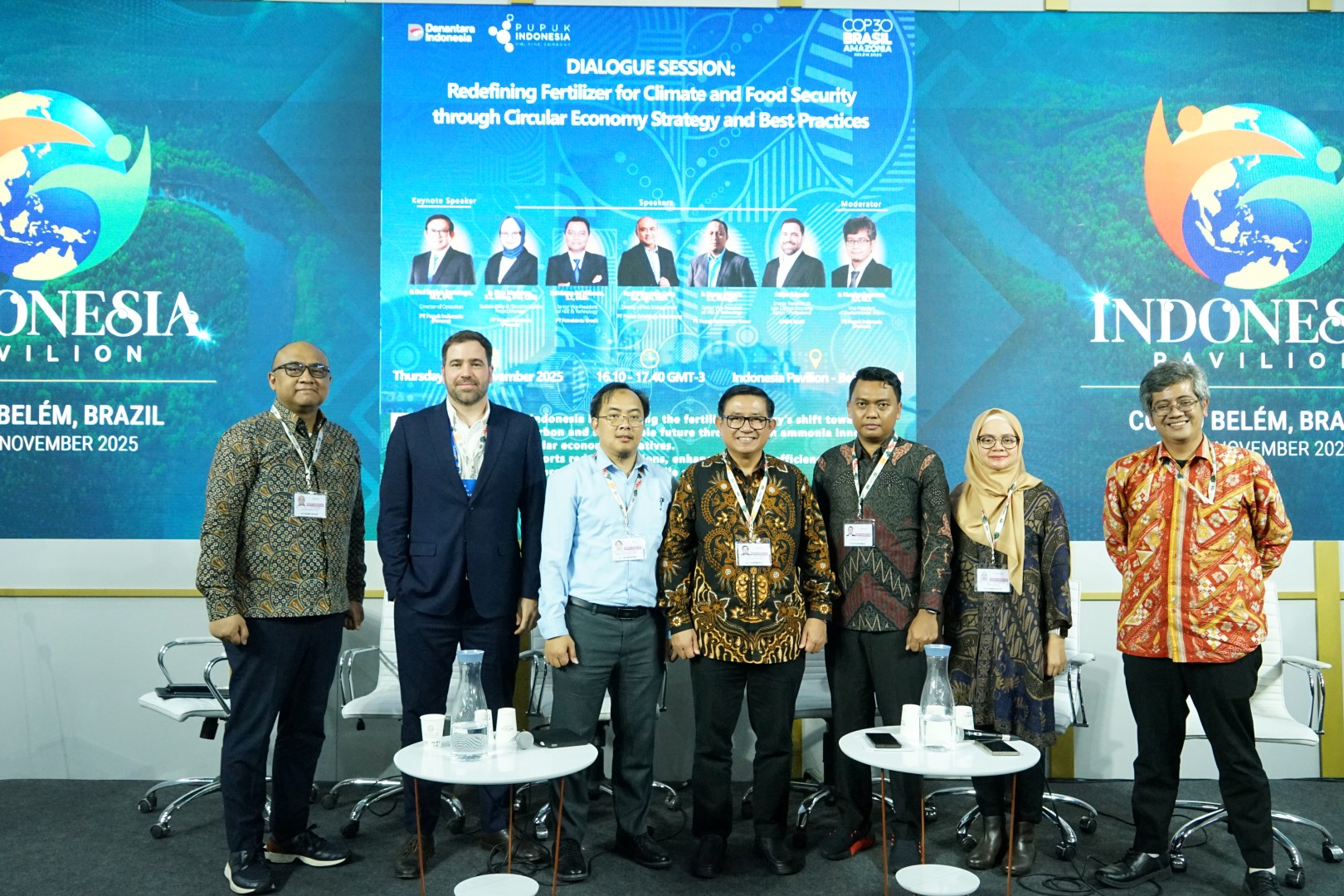
The ammonia industry is fundamental to global food security as the backbone of fertilizer production. Yet, this sector is also energy-intensive and carbon-intensive, contributing significantly to global greenhouse gas emissions. As the largest fertilizer producer in the Asia Pacific and MENA regions, Pupuk Indonesia carries both the responsibility and the opportunity to lead the fertilizer sector’s transition toward a low-carbon and sustainable future. To realize this ambition, Pupuk Indonesia has designed a comprehensive decarbonization roadmap that integrates industrial transformation with nature-based solutions. At the industrial level, the company is advancing energy efficiency programs, transitioning to cleaner fuels, deploying renewable energy, and most importantly, shifting from conventional grey ammonia to blue and green ammonia pathways. This transition enables the production of low-carbon fertilizers that reduce carbon intensity and create opportunities for new applications beyond agriculture, including chemicals, marine fuel, and clean power. By redefining how fertilizers are produced, Pupuk Indonesia positions clean ammonia as a cornerstone for food security and a strategic lever for climate mitigation.
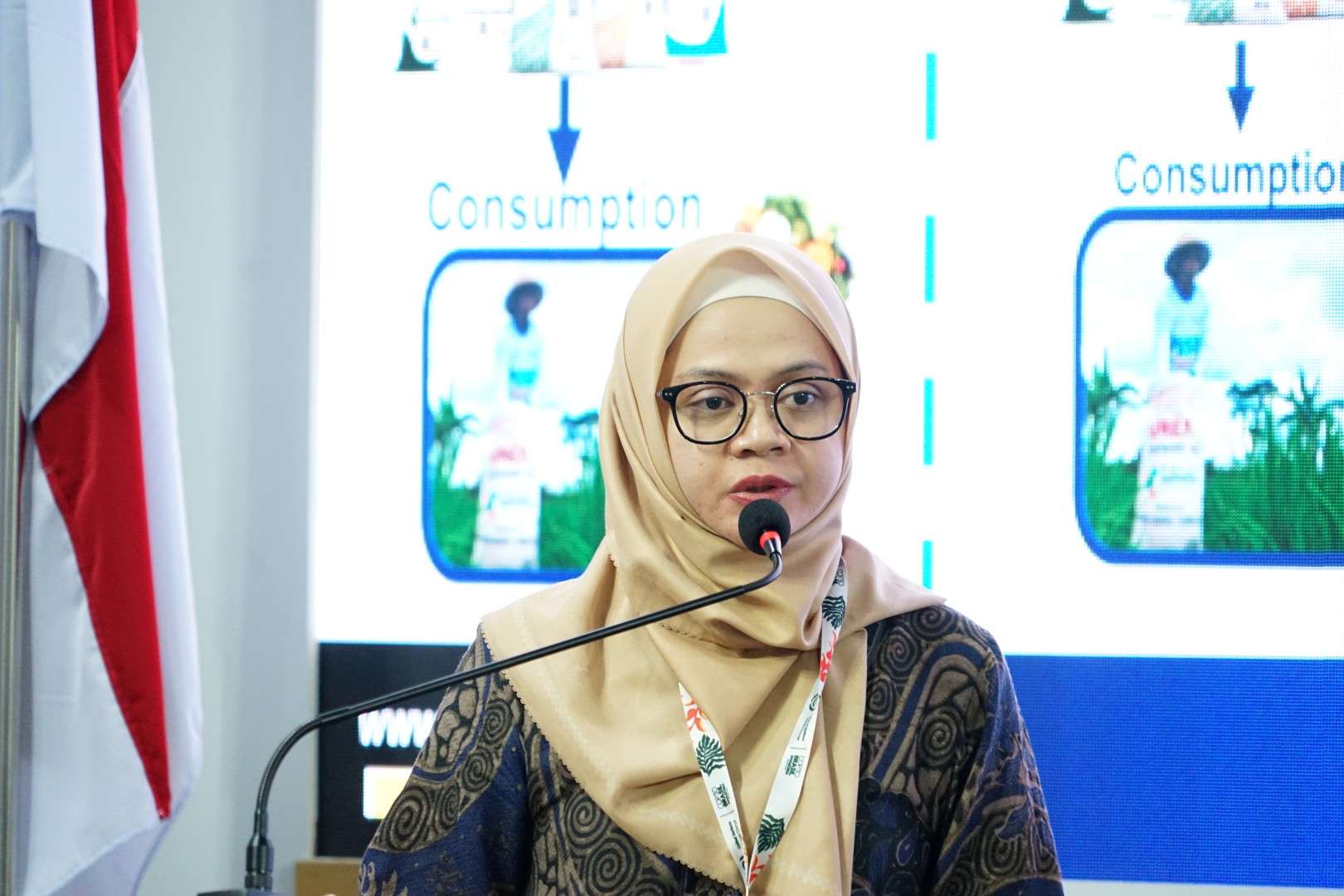
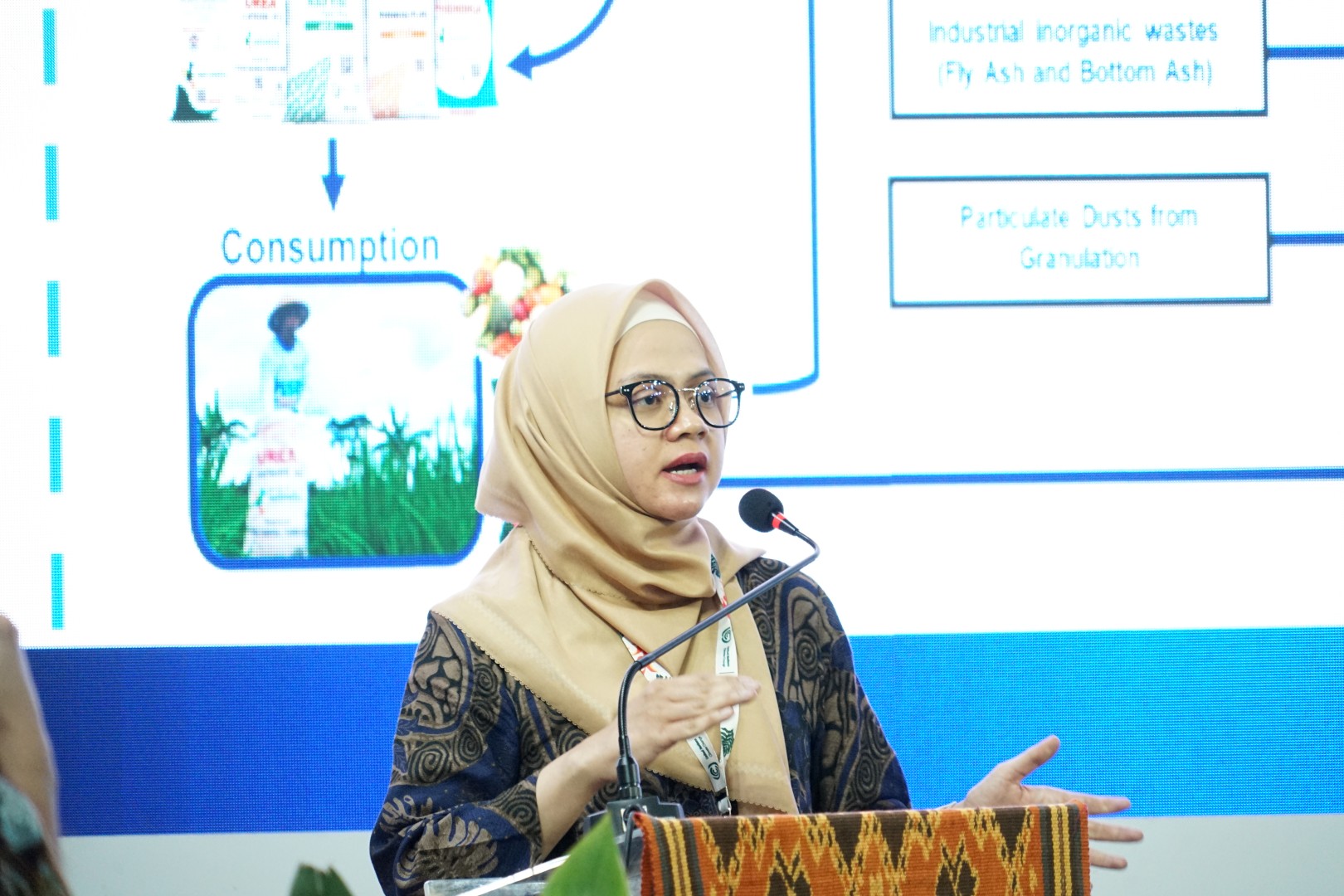
In parallel, Pupuk Indonesia is embedding circular economy principles across its operations to maximize resource efficiency, minimize waste, and create shared value. Circular economy best practices include transforming industrial by-products into fertilizer components, capturing carbon for new uses, developing innovative fertilizer formulations, and promoting ecosystem-based farming systems. These initiatives embody industrial symbiosis by turning waste into valuable resources, while also strengthening soil health, biodiversity, and community welfare. Through this dual strategy—scaling low-carbon fertilizers via clean ammonia and embedding circular economy innovations—Pupuk Indonesia is accelerating sustainable transformation across the agricultural value chain. This approach not only supports Indonesia’s national climate commitments but also demonstrates how a state-owned enterprise can deliver systemic change at the intersection of climate action, food and water security, and inclusive economic development.
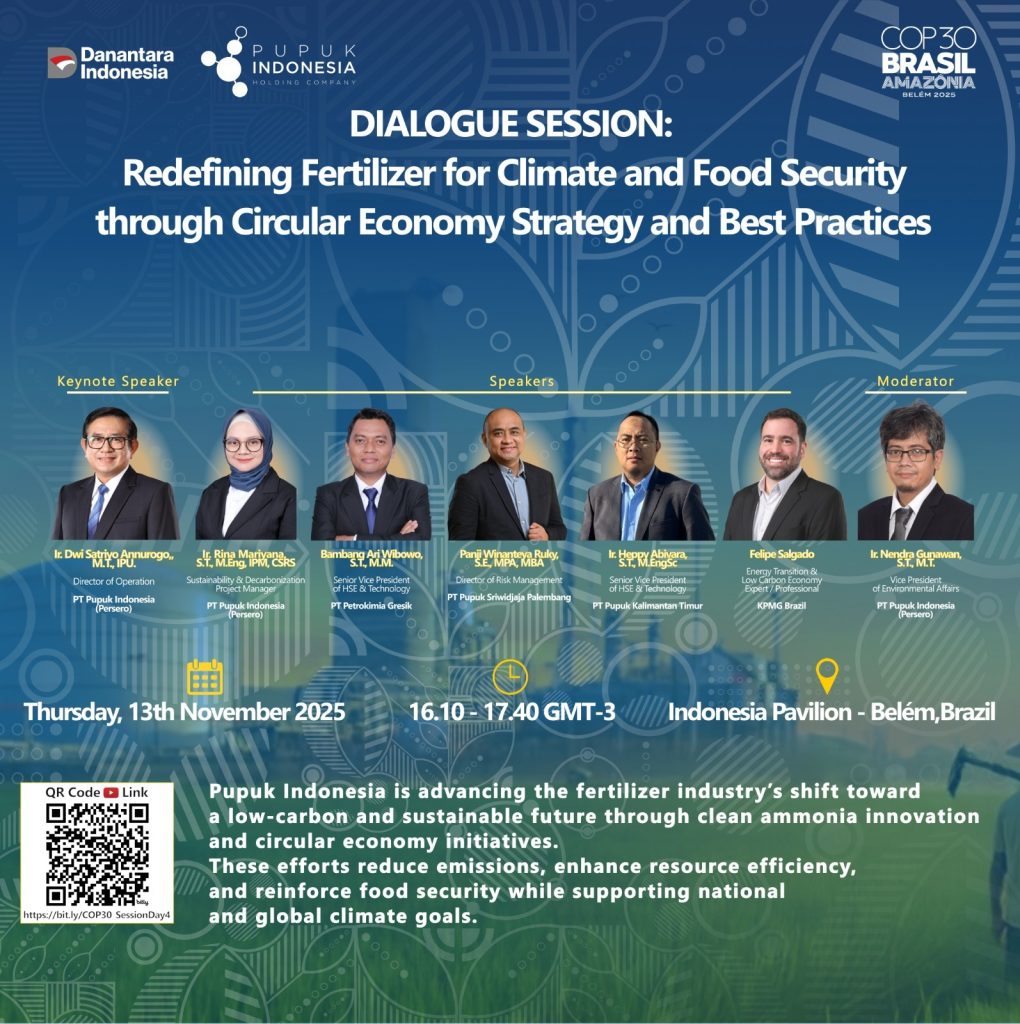
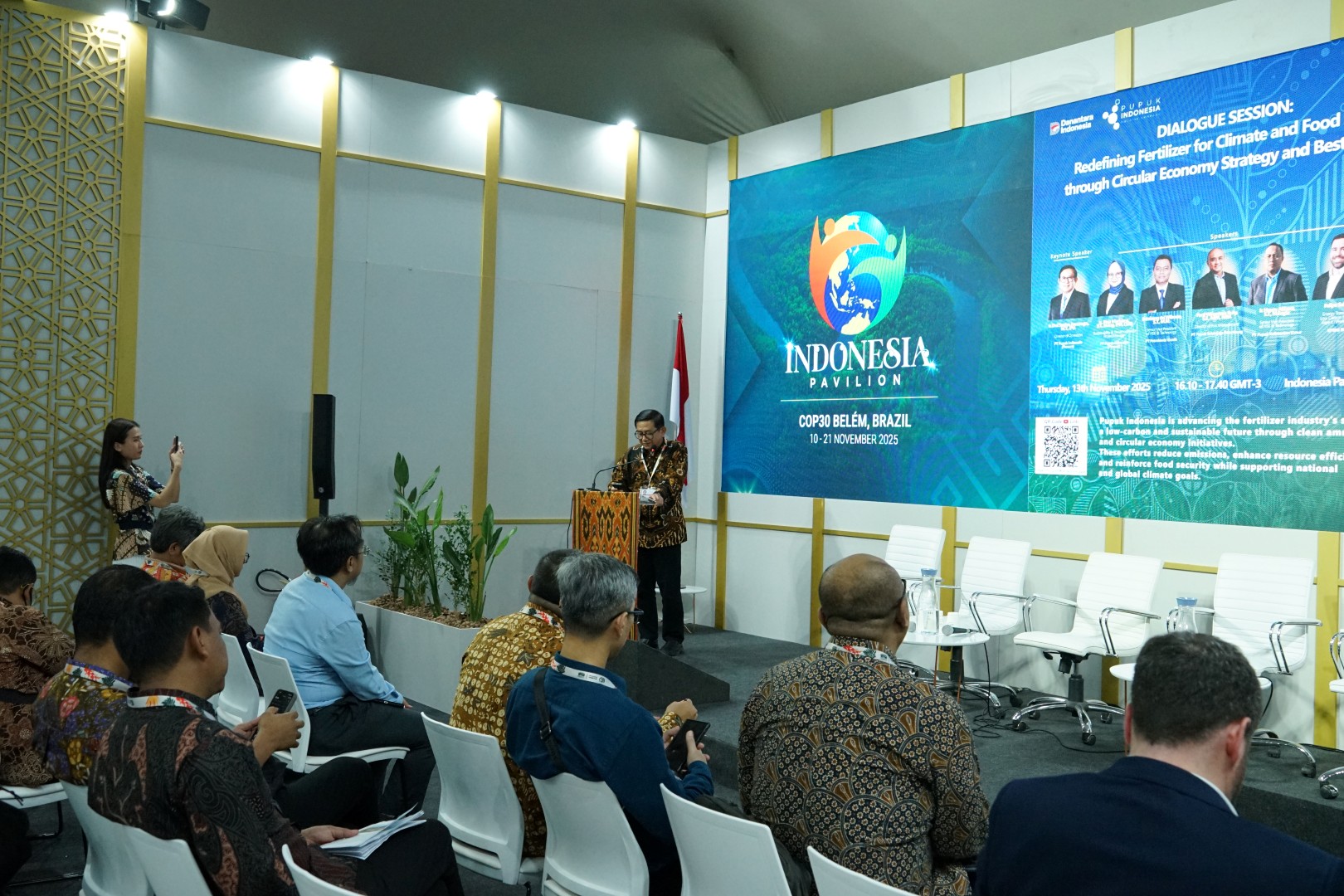
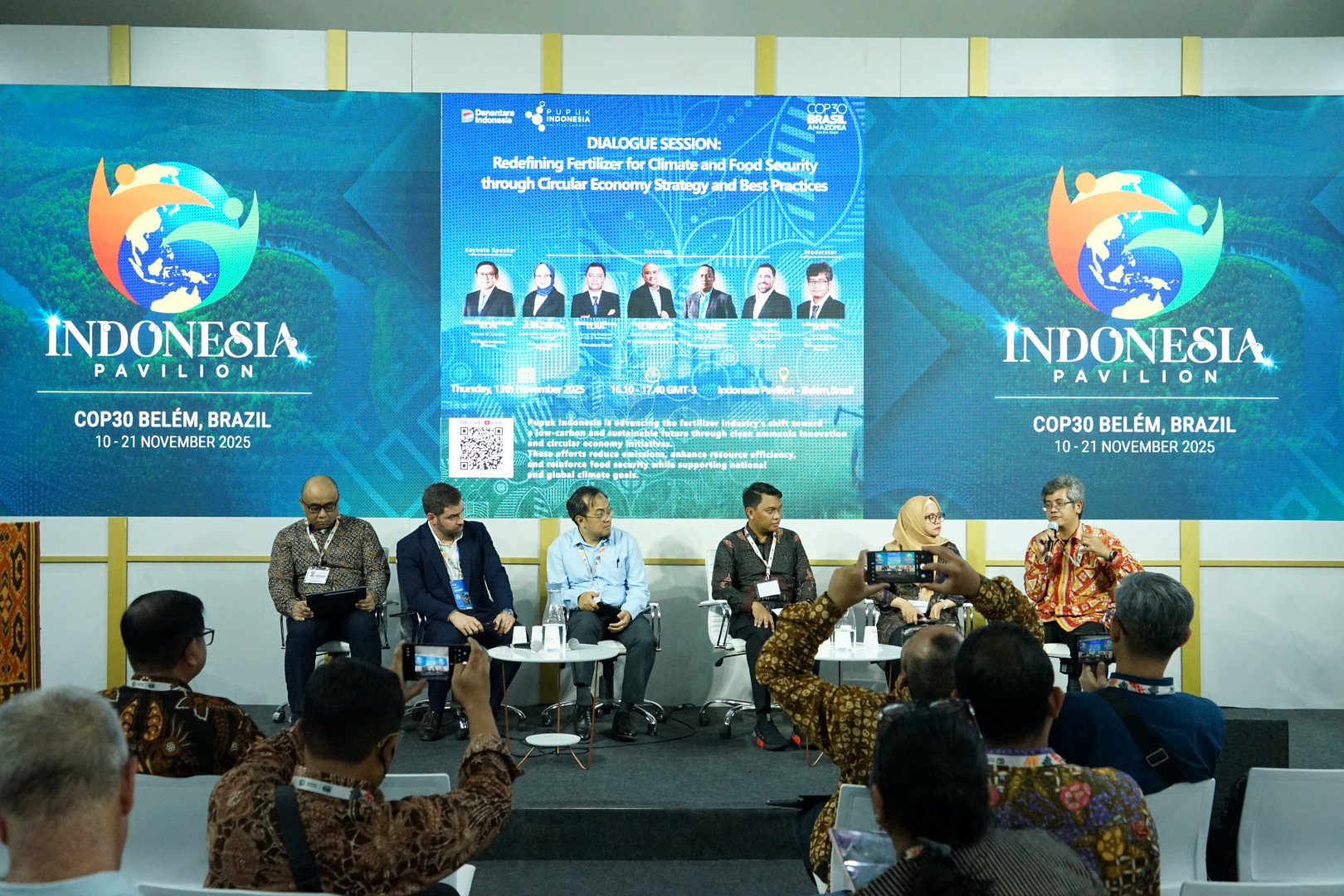
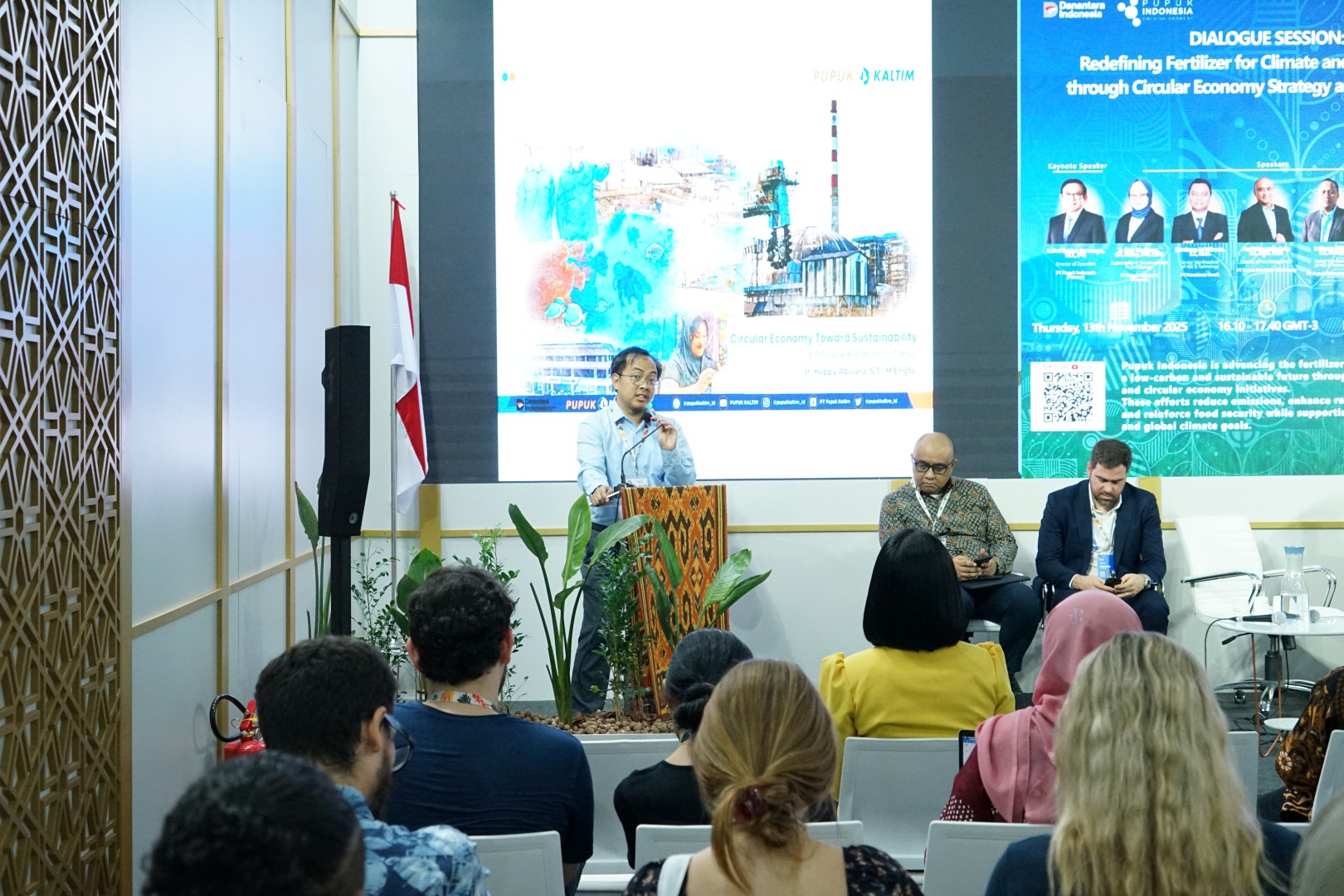
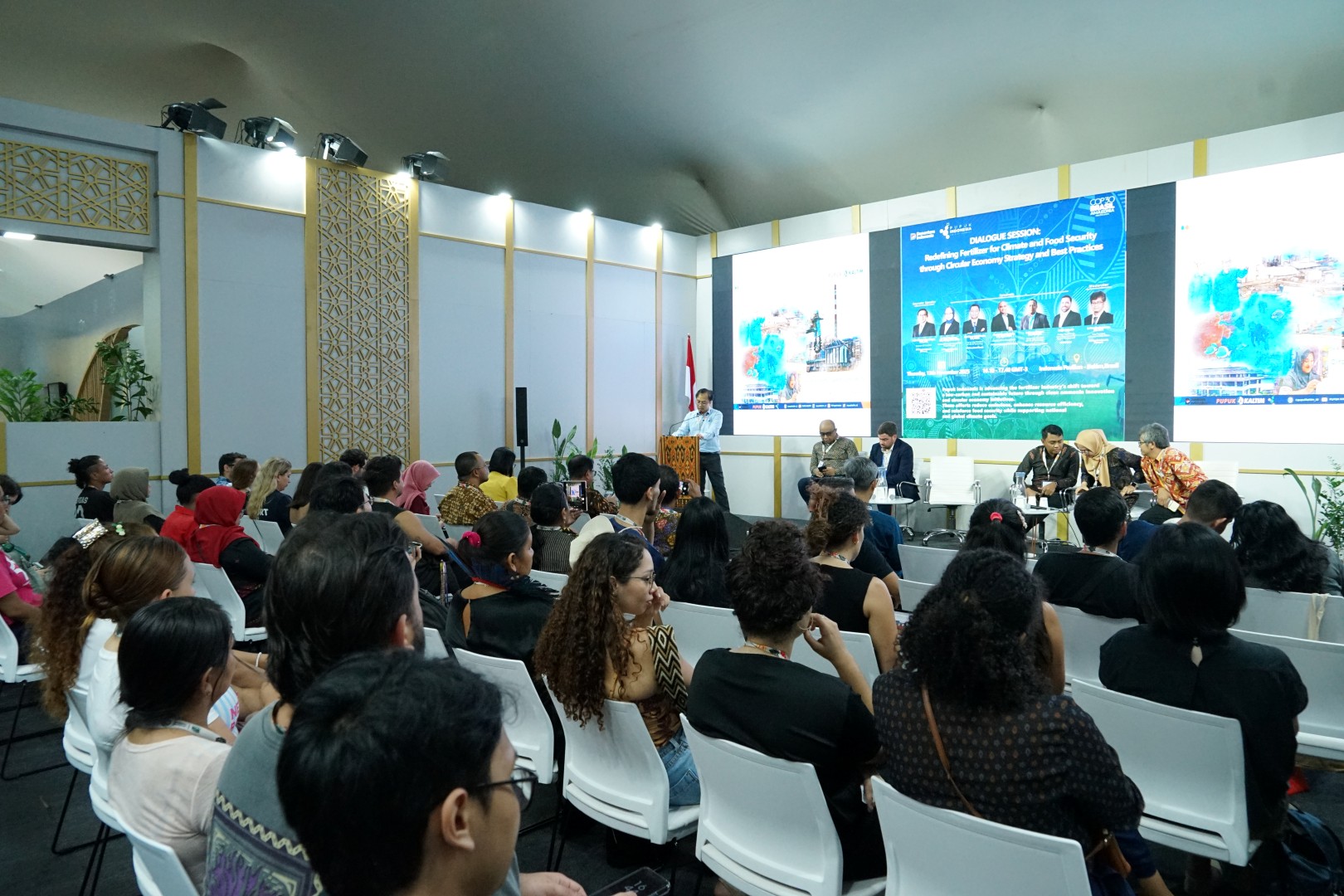
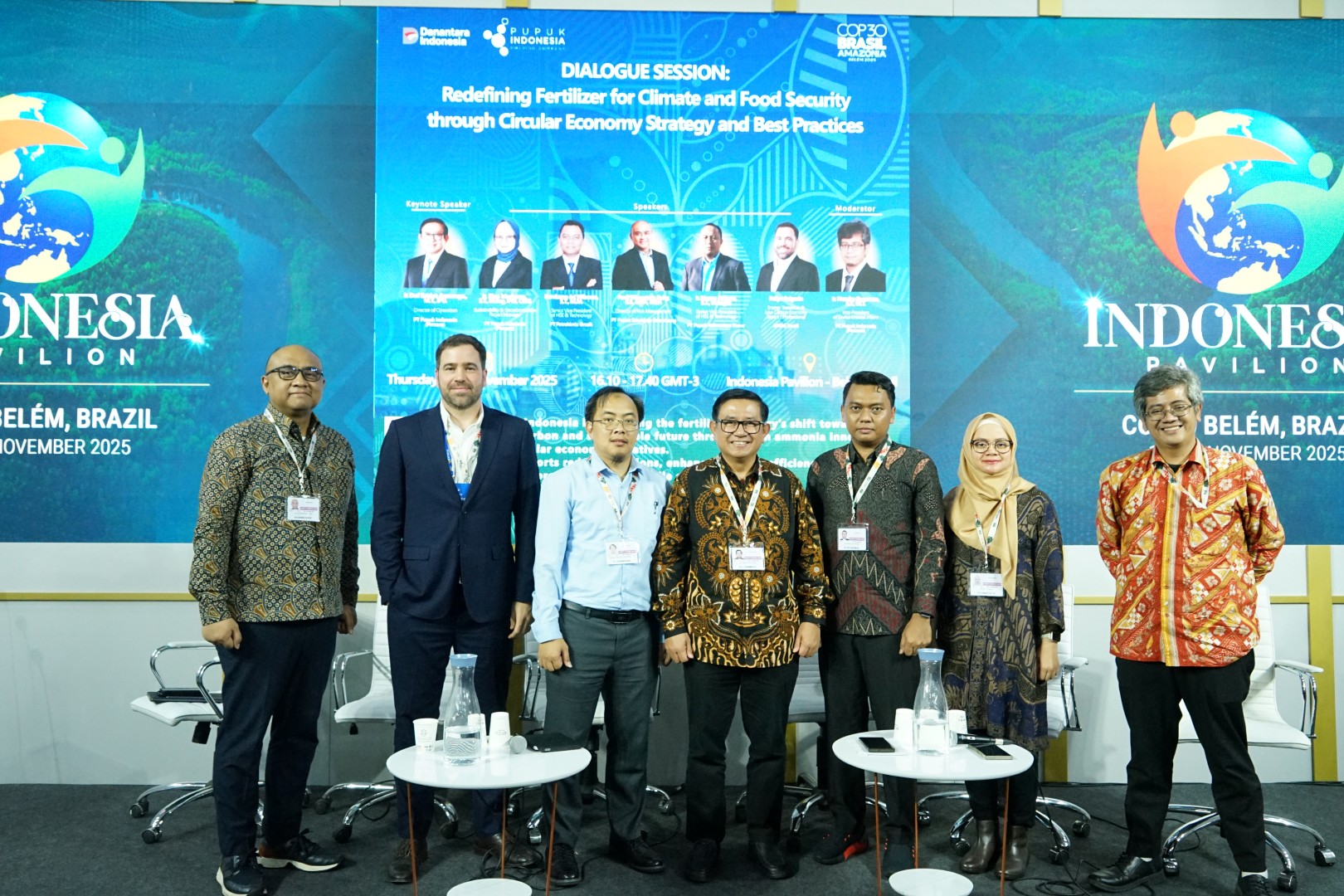
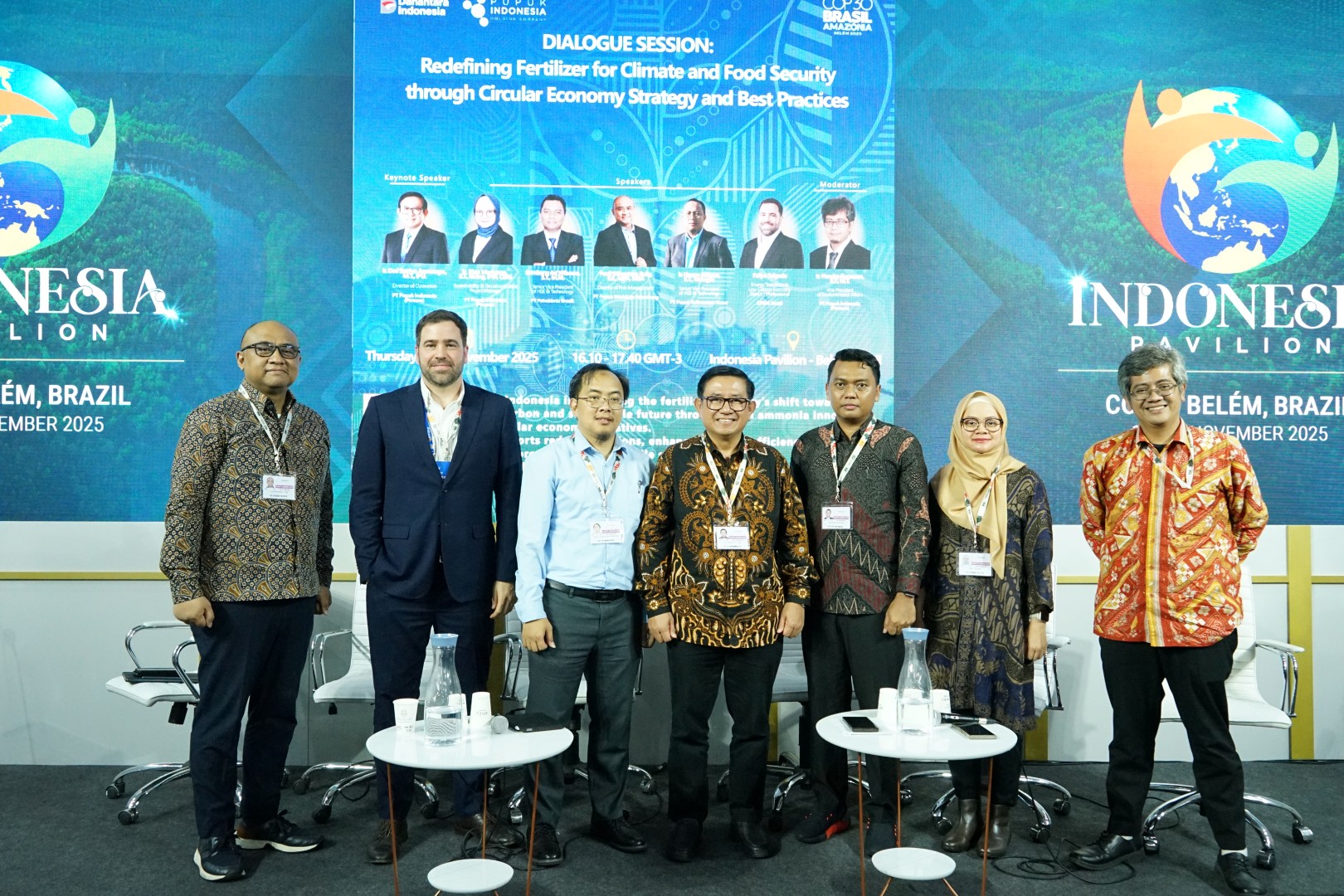
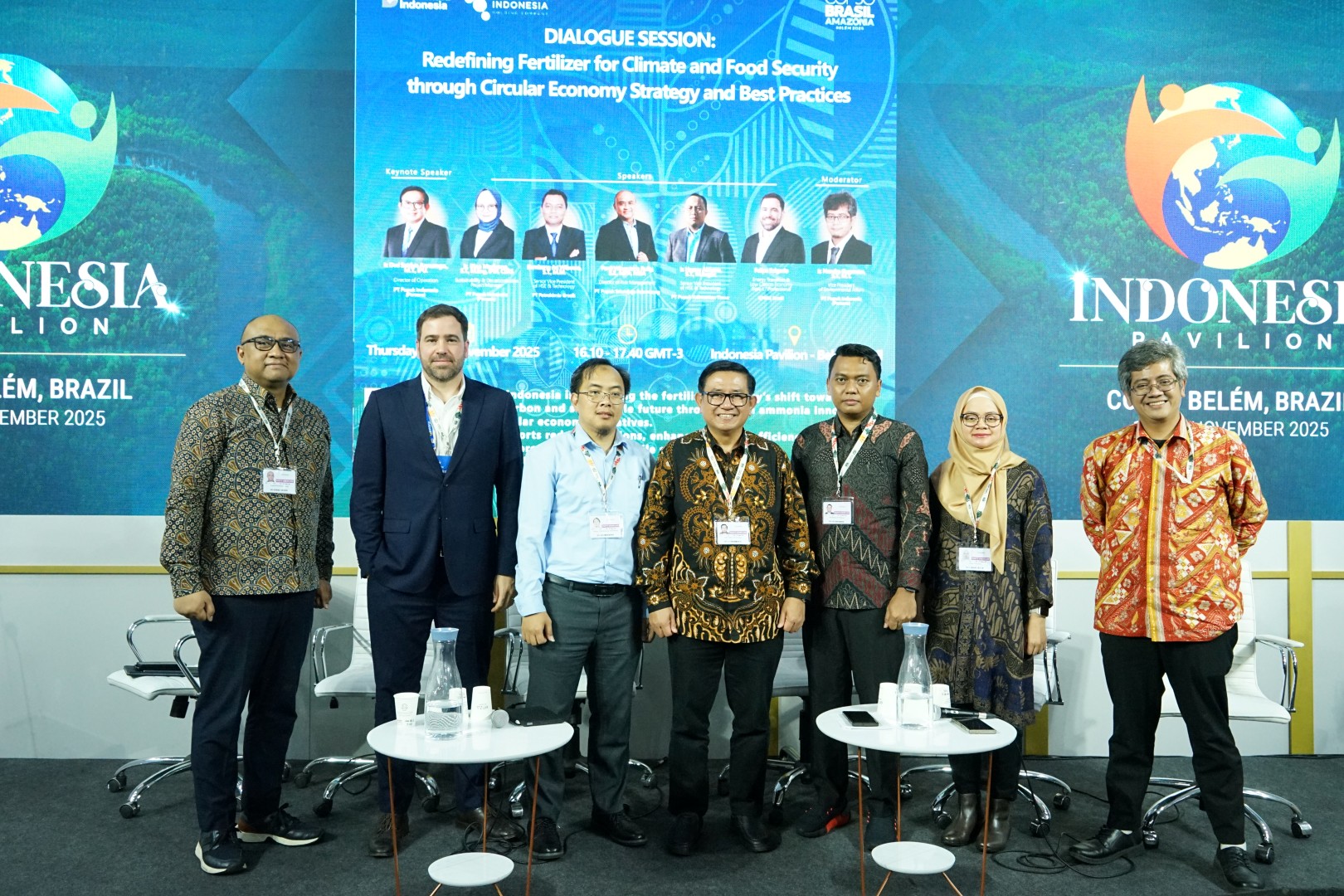
This dialogue aims to highlight the role of circular economy strategies and industrial innovation in redefining fertilizer production for a low-carbon future, share best practices that enhance both climate and food security, and foster collaboration among global stakeholders to accelerate the transition toward sustainable and resilient agricultural systems.