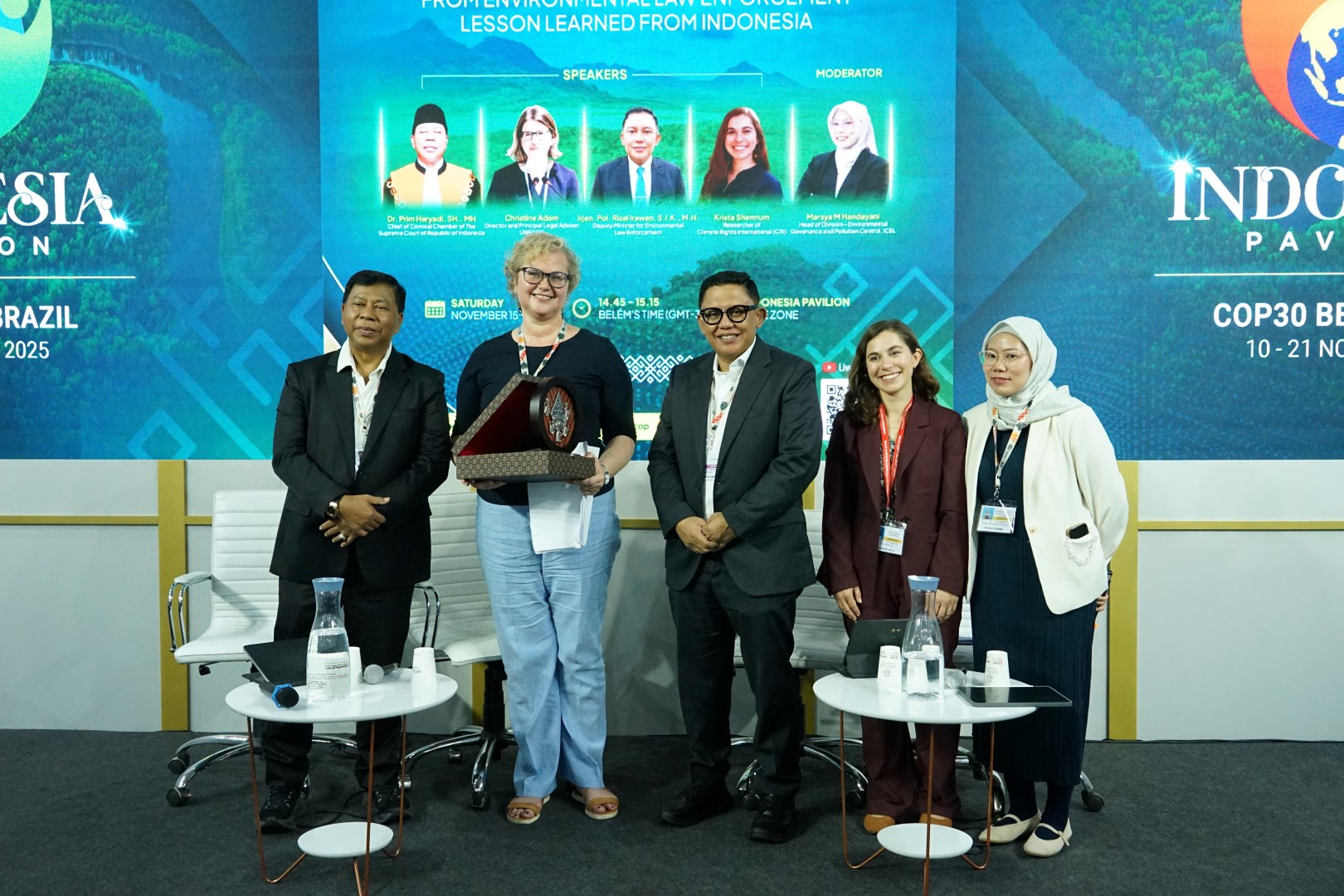
Indonesia is one of the most biodiverse countries in the world, with the third largest tropical forest, peat ecosystems that store large amounts of carbon, and marine resources that play an important role in maintaining global climate balance. This makes Indonesia not only an ecological buffer for the region, but also a significant contributor to global efforts to curb climate change. However, on the other hand, pressure on the environment continues to increase in line with land expansion, extractive industrial activities, and natural resource management practices that are not yet fully sustainable.
One of the main causes of climate change in Indonesia is forest and land fires, particularly in peat ecosystems. Forest and land fires not only cause ecological and economic losses, but also produce enormous amounts of carbon emissions that impact public health, disrupt cross- border activities, and damage Indonesia's reputation in its global commitment to climate change control.
Indonesia commitment to environmental restoration and protection has made various efforts, both through national policies, regulatory strengthening, and energy transition initiatives. In addition, litigation has also begun to play an important role in the environmental restoration process. Various environmental lawsuits filed by civil society, environmental organisations, and state institutions have become part of efforts to uphold climate justice in Indonesia.
The image above shows a downward trend in the extent of forest and land fires over the past 10 years, which is an indicator of Indonesia's seriousness in addressing this issue. This decline not only reflects the success of preventive measures in the field, such as increased patrols, peat restoration and improved governance, but is also the result of consistent law enforcement by the government and relevant stakeholders. In this context, the litigation approach plays an important role as an instrument that strengthens the effectiveness of efforts to control forest and land fires.
Between 2015 and 2025, 24 lawsuits related to forest and land fires were filed, with 12 cases having permanent legal force (inkracht), 10 cases still undergoing legal proceedings, 1 case in the trial stage, and 1 case settled through agreement. These cases are spread across several provinces, with the highest concentration in areas with peatlands and large-scale plantations, namely South Sumatra (8 cases), South Kalimantan (4 cases), Central Kalimantan (4 cases), Jambi (2 cases), Riau (2 cases), and West Kalimantan (4 cases).
After restoration, various positive impacts began to appear, including the restoration of vegetation cover, which plays a role in restoring flora and fauna habitats, improved air quality due to reduced potential for repeated fires and carbon emissions, and the return of the hydrological function of peatlands, which are able to store water and prevent flooding and drought. In addition, soil fertility gradually increases, supporting ecosystem productivity while making a significant contribution to reducing national emissions.
Overall, Indonesia's experience in tackling forest and land fires through a combination of preventive policies, better environmental governance, and litigation instruments points to a clear direction towards strengthening climate justice. The downward trend in forest and land fires over the past decade proves that these measures are beginning to bear fruit, although significant challenges remain in the future. The sustainability of these efforts requires consistency, courage in law enforcement, and cross-sector collaboration so that the results of recovery can be felt more widely. With strong commitment, Indonesia is not only able to maintain its own ecological resilience, but also make a real contribution to global climate stability.