
Belém, Brazil, 21 November 2025,
The Indonesia Pavilion at COP30 in Belém concluded its two week mission with a resounding success. The final day focused on synthesizing the critical link between economic profit and environmental protection, proving that Indonesia is open for Nature-Positive business. Protecting nature is no longer an act of charity, but a core business strategy for survival in the 21st century.
Here are the key takeaways from the closing day of the pavilion on 21 November 2025 :
1. Biodiversity Action Plan as a Way Towards Sustainable Business (Session D1)
Session D1, titled Biodiversity Action Plans as a Way Towards Sustainable Business, challenged the private sector to move beyond compliance. The session marked a significant milestone, as noted by Artemis Kostareli from Ipieca, this was the first time Biodiversity Action Plans (BAPs) were central to a Climate COP, signaling that climate and nature can no longer be treated in isolation. Meanwhile, The Ministry of National Development Planning (BAPPENAS) asserted that environmental stewardship is a prerequisite for long-term prosperity.
Pertamina Hulu Energi (PHE) aims for a Net Positive Impact, leaving nature better than they found it by implementing Biodiversity Action Plans across all operations by 2030. In the heavy industry sector, IMIP showcased science based conservation by establishing a 23 hectare EduPark and planting over 70,000 mangroves to offset emissions. “Protecting biodiversity is not our responsibility but is our resilience strategy and core business enabler,” said Defrinaldo from PHE.
Pertamina Hulu Energi (PHE) outlined its ambitious target to have 100% of its working areas covered by Biodiversity Action Plans by 2030. Defrinaldo from PHE explained their Preliminary Assessment methodology, which screens projects through six lenses including social and cultural factors before they even begin. His message was clear, “Our business thrives when nature thrives”.
PT Indonesia Morowali Industrial Park (IMIP), corporation in the nickel industry, showcased how heavy industry can coexist with conservation. Director Dermawati presented empirical data from their 23 hectare EduPark, home to 160 flora species. Their action went further, facing land use conflict, the company successfully translocated 24 endemic Sulawesi Black Monkeys (Macaca tonkeana) to a sanctuary, proving that industrial expansion doesn’t have to mean extinction.
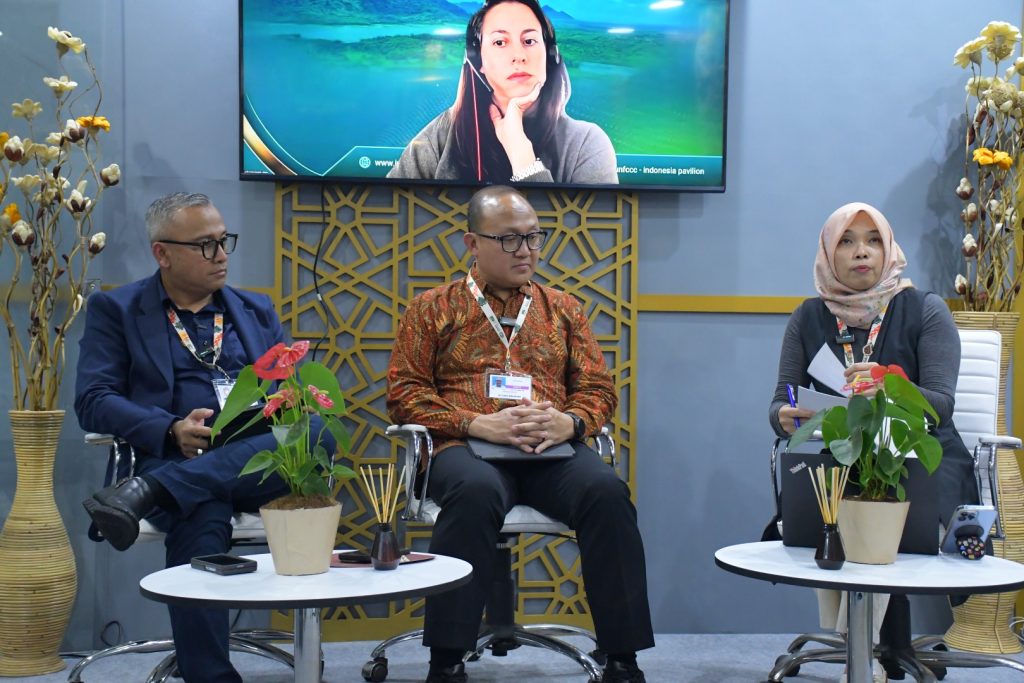
Biodiversity Action Plan as a Way Towards Sustainable Business (Session D1)
2. Integrating Peatland Restoration and FOLU within the Global Carbon Market Framework (Session B9)
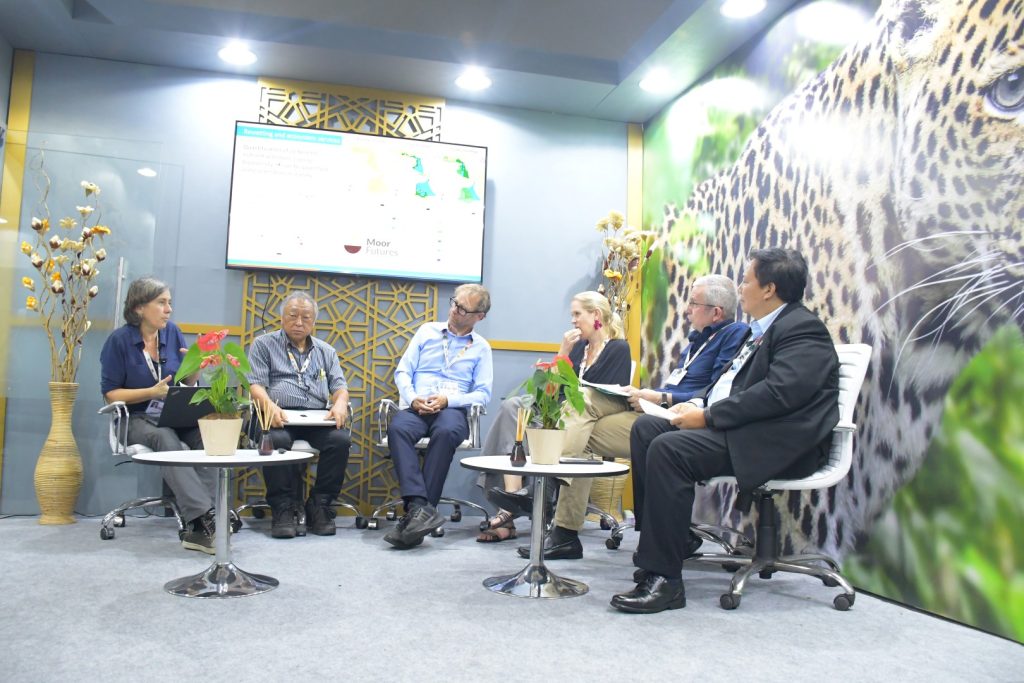
In Session B9, Integrating Peatland Restoration and FOLU within the Global Carbon Market Framework experts labeled tropical peatlands as sleeping giants of climate action. Draining these lands is catastrophic. Data from the Congo Basin showed that such destruction would release emissions equivalent to three years of global fossil fuel usage. However, protection is highly profitable. Indonesia’s Production-Protection model, exemplified by the Restorasi Ekosistem Riau (RER) project, uses buffer zones to safeguard deep peat. This strategy has successfully generated over 13 million tons of validated carbon credits, offering a scalable blueprint for the world.
Prof. Simon Lewis from the University of Leeds delivered a stark economic warning using data from the Congo Basin. Draining these peatlands would release emissions equivalent to three years of global fossil fuel use. The calculated global damage? A staggering $6.4 trillion. Conversely, investing in their protection yields an avoided damage return of 16,000 times the investment cost .
Dian Novarina from APHI presented a practical solution from Indonesia’s Kampar Peninsula. The private sector has implemented a ring of sustainable plantations that act as a physical buffer, protecting the pristine deep peat forests in the center. This model is financially viable, with the Restorasi Ekosistem Riau (RER) project validating over 13 million tons of carbon credits, proving that private restoration is bankable .
Prof. Mitsuru Osaki from JICA added a new dimension to the value of peatlands. Peatlands are natural air conditioners. His research shows that peat forests keep local temperatures up to 10°C cooler than open land, a vital service for local climate resilience that often goes unpriced.
3. The Grand Finale : Closing Ceremony
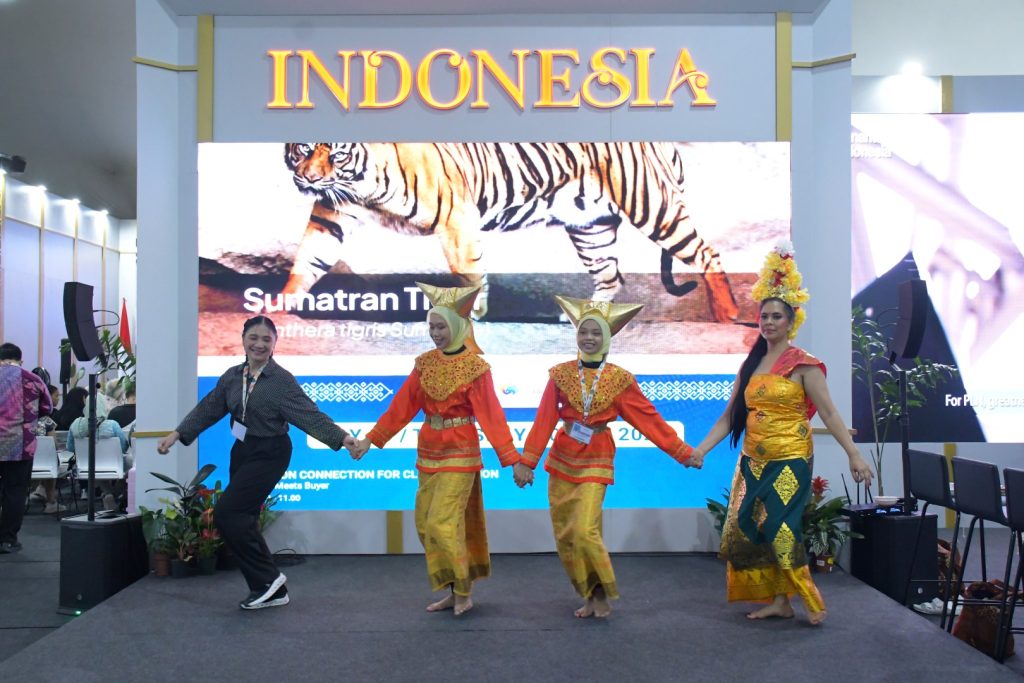
The Indonesia Pavilion concluded its two-week sessions with a Closing Ceremony that celebrated substantial achievements. The pavilion hosted over 5,000 visitors and facilitated more than 20 bilateral meetings, serving as a hub for soft diplomacy and hard negotiation. The highlight of the entire event was the Carbon Connection for Climate Action : Seller Meets Buyer forum, which successfully translated policy into transactions. The pavilion recorded expressions of interest for 44 carbon credit projects with a potential transaction volume of over 2.7 million tons of CO2e . These deals span energy, forestry, and waste management, proving that Indonesia’s high-integrity carbon market is open for business.
As the delegation looks toward the next COP in Turkey in 2026, the message from Belém is clear, Indonesia has moved from planning to implementation. The integration of biodiversity into business plans and peatlands into carbon markets shows a nation that is ready to lead the global green economy.