
Belém, Brazil, 14 November 2025,
The dialogue at the Indonesia Pavilion has shifted from ambition to execution. In a series of high level sessions spanning finance, carbon markets, and industrial transformation, Indonesia demonstrated that its climate strategy is no longer just a set of targets, but a functioning ecosystem.
From launching new biodiversity funding mechanisms to signing historic bilateral carbon deals and redefining heavy industries, the daily recap highlights a nation integrating economic growth with ecological integrity.
Here are the sessions of fourth day, 13 November 2025 in Indonesia Pavilion :
1. Financing Nature: Bridging the $700 Billion Gap (Session A3)
The session began by addressing the global biodiversity funding gap, estimated at USD 700 billion annually. Session A3, titled Sustainable Financing for Biodiversity Conservation, moved beyond complaints to concrete solutions. The Launch of “Dana Terra” The headline announcement was the launch of “Dana Terra” (Biodiversity Window) by the Indonesian Environment Fund (BPDLH). Unlike rigid traditional funding, this mechanism is designed for flexibility, ensuring funds reach the ground level where conservation actually happens. A pilot project is already underway in Tesso Nilo National Park, backed by grants from TFCA-Sumatra and USAID to restore ecosystems while supporting local livelihoods.
Dr. Daniel Zarin from WCS provided the session’s most memorable quote, warning the market against seeking cheap conservation credits. He emphasized that high integrity projects respecting indigenous rights require genuine investment. Valerie Hickey from the World Bank added a systemic perspective, arguing that “money isn’t moving to where it needs to be.” She called for repurposing the USD 1.25 trillion spent annually on harmful subsidies towards nature-positive actions.
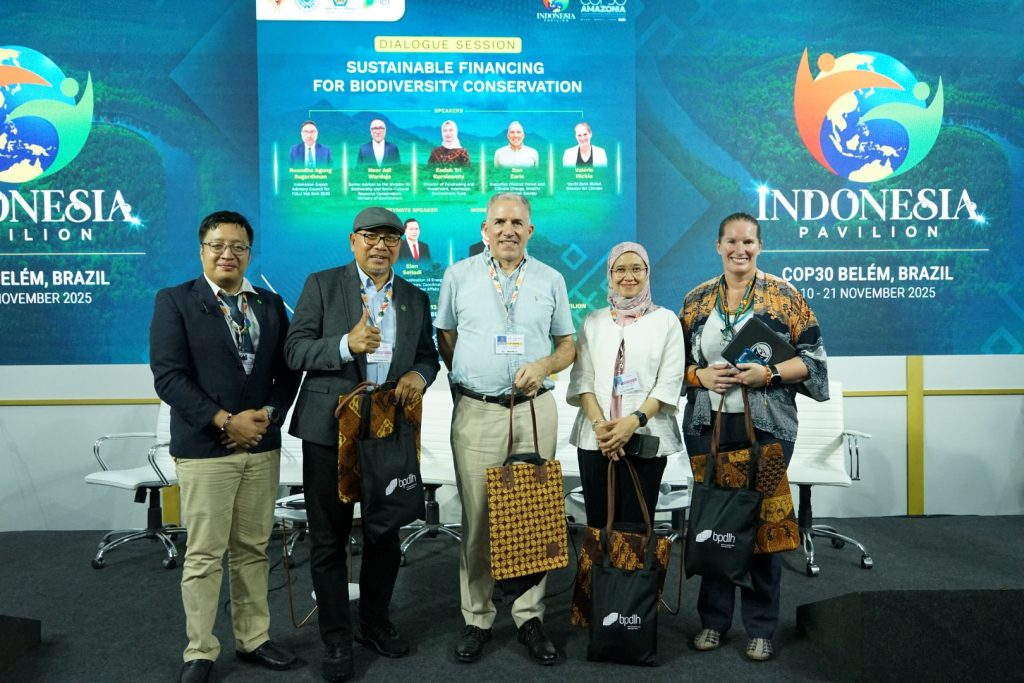
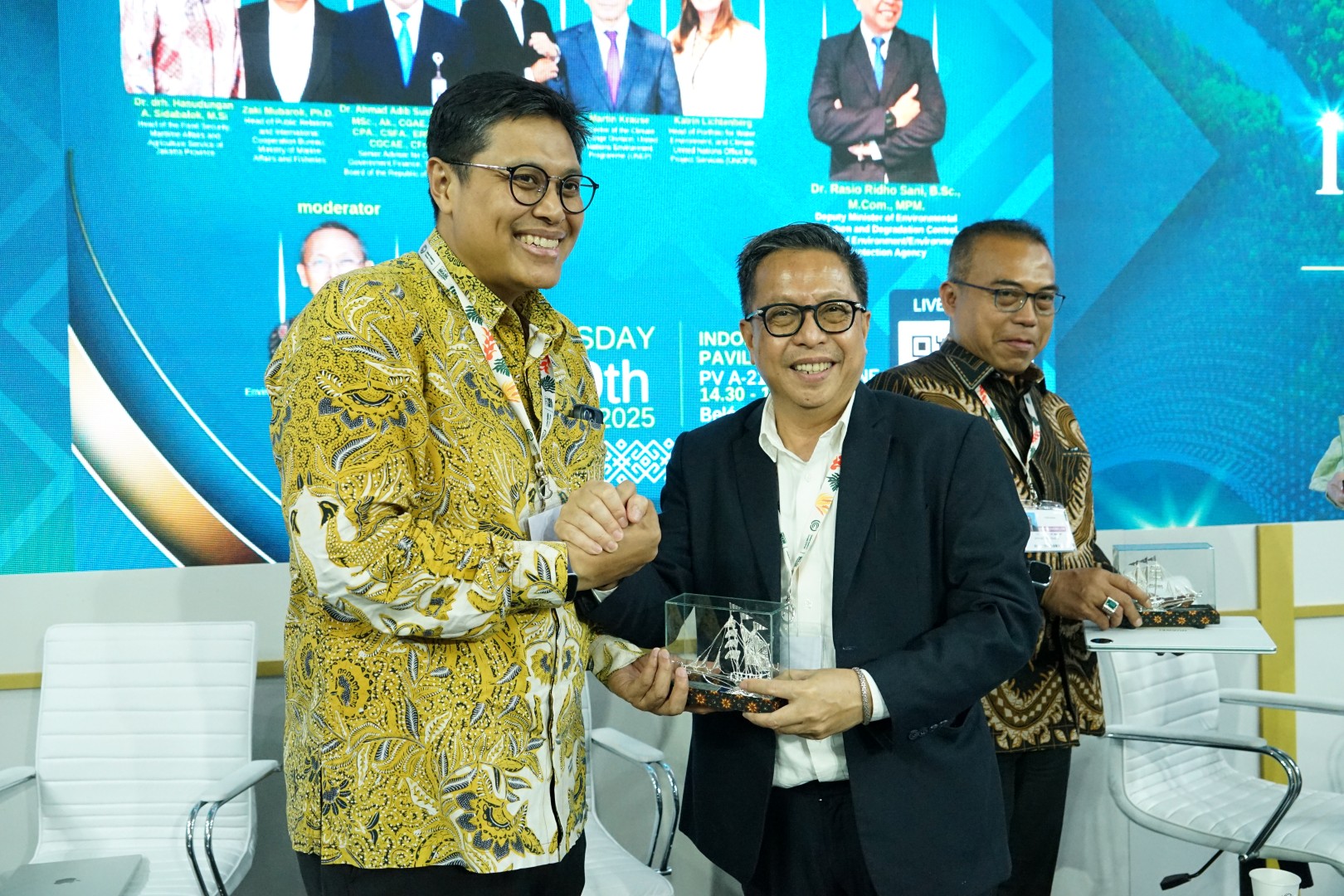
Sustainable Financing for Biodiversity Conservation session
2. The Carbon Architecture : Regulation & Transactions (Sessions B5 and Carbon Connection for Climate Action)
While Session A3 focused on funding, Sessions B5 and Carbon Connection for Climate Action session showcased Indonesia’s carbon market, combining strict regulation with historic transactions.
In Session B5 (Unlocking the Potential of Carbon Economic Value for Climate Action towards Indonesia’s FOLU Net Sink 2030), the Ministry of Environment clarified the philosophical foundation of Indonesia’s market: “Carbon is a service, not a commodity”. This principle underpins the National Registry System (SRN), ensuring transparency and preventing double counting.
Prof. Dr. Haruni Krisnawati emphasized that forests are “living climate solutions,” not just assets to be traded. She highlighted that Indonesia’s governance credibility has already unlocked over USD 300 million in Results-Based Payments from Norway and the Green Climate Fund.
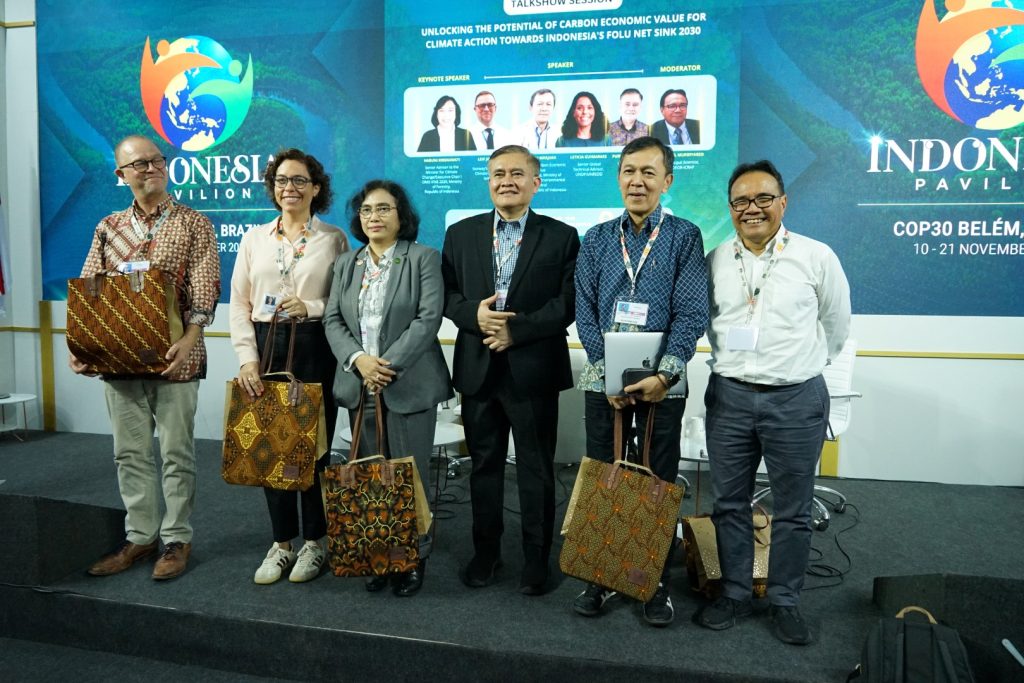
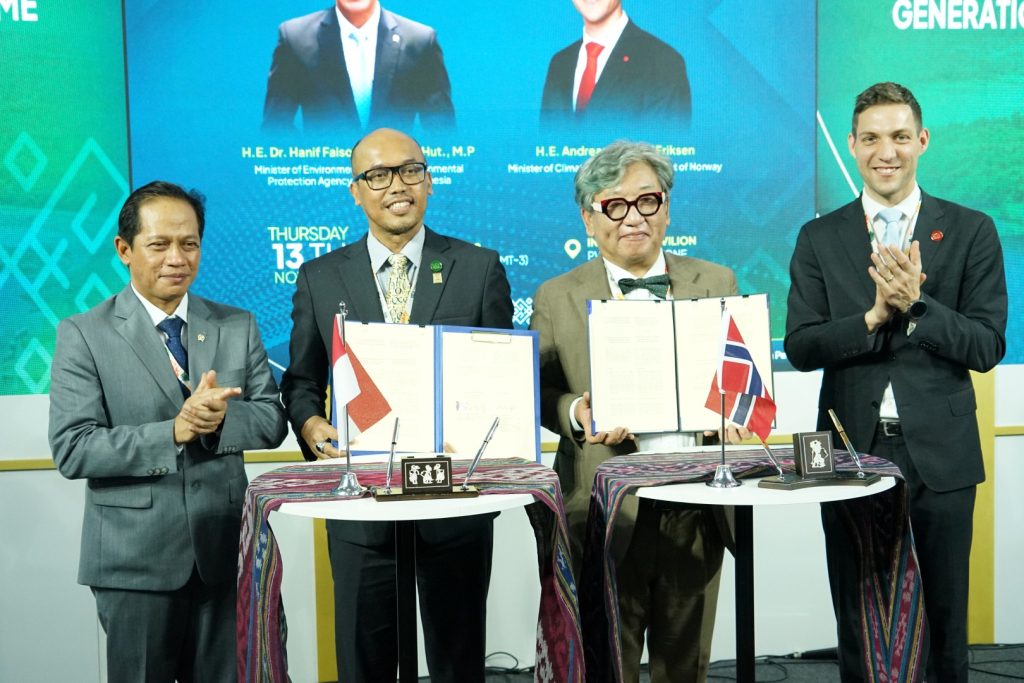
Carbon Connection for Climate Action : Seller Meets Buyer (Session SMB), The topic discussed in B5 turned into action during the Carbon Connection for Climate Action : Seller Meets Buyer session. The highlight was a historic Mutual Expression of Intent (MoI) between PT PLN and the Global Green Growth Institute (GGGI) representing Norway.
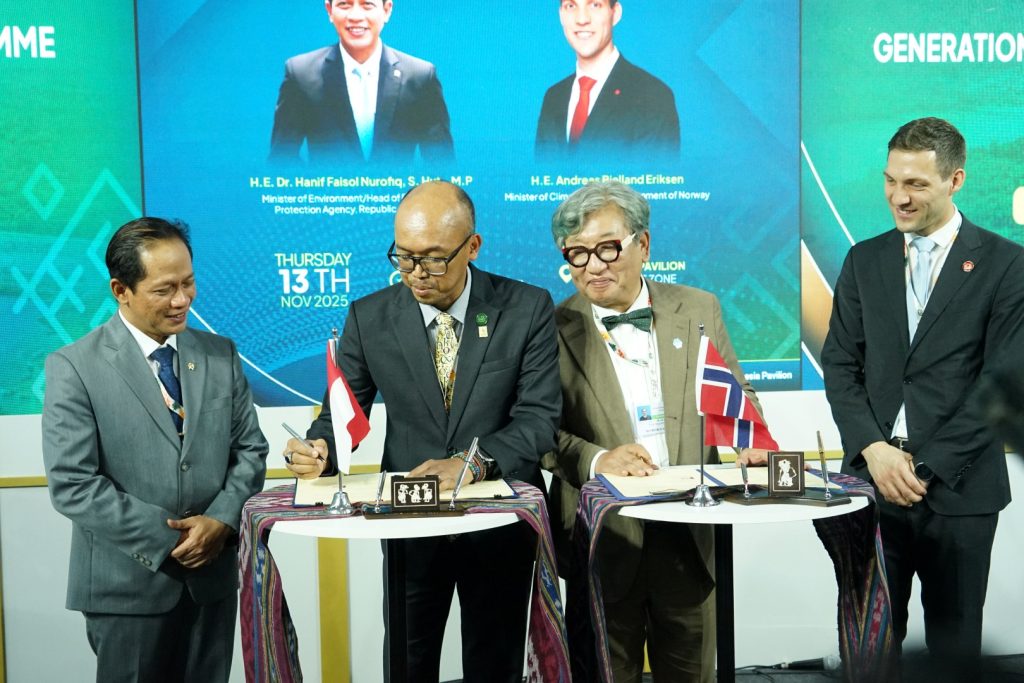
Carbon Connection for Climate Action : Seller Meets Buyer session
- Significance: This is the first Article 6.2 bilateral cooperation for technology-based projects (like floating solar PV) in Indonesia.
- Impact: It targets a reduction of 12 million tons of CO2e, with potential transaction values in the hundreds of millions of dollars.
Additionally, PalmCo became the first state-owned plantation company to receive the Emission Reduction Certificate (SPE-GRK) for converting palm oil waste into energy, while Dassa Corp introduced an AI-driven peatland restoration project offering 2.5 million verified carbon units annually.
3. Industrial Transformation: Energy & Agriculture (Sessions B6 and F4)
The final part is the transformation of Indonesia’s heavy industries forestry and fertilizer into drivers of the green economy.
Session B6 challenged the traditional view of forestry. Director General Ir. Laksmi Wijayanti declared that Industrial Plantation Forests (HTI) are no longer just timber producers but the green backbone for a future bioenergy economy. To support this, the Ministry of Forestry highlighted the SVLK (Timber Legality and Sustainability Assurance System) as a Green Passport, ensuring all biomass is legal and traceable. Industry players like APHI proposed mixed plantations, combining fast growing energy crops with industrial trees to optimize land use without new deforestation.
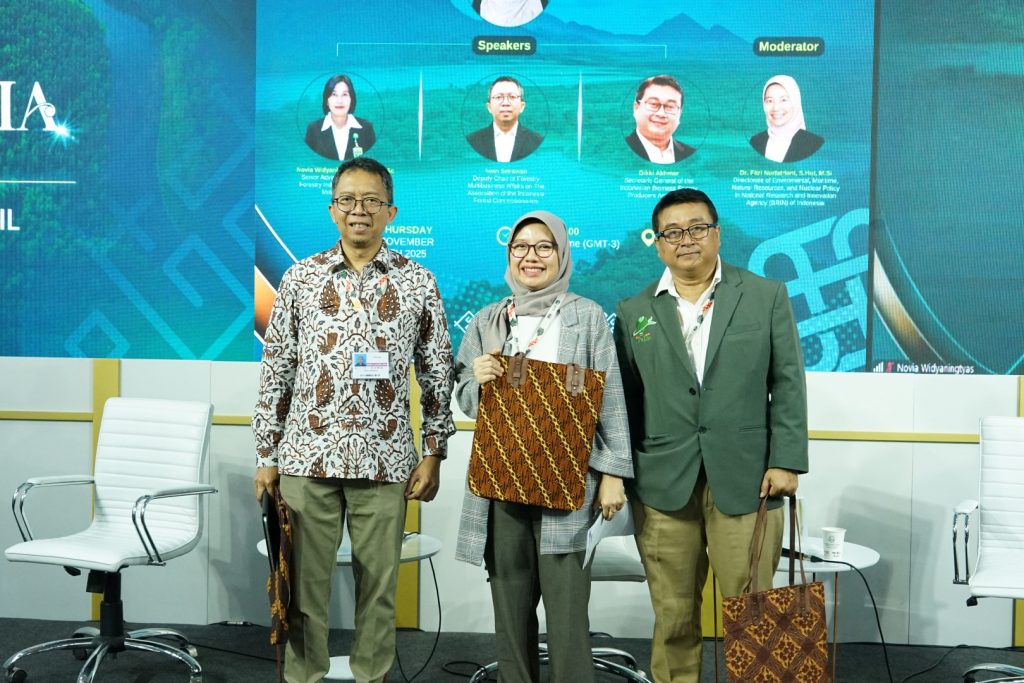
In Session F4, PT Pupuk Indonesia demonstrated that food security and climate action can coexist. The state-owned enterprise unveiled a roadmap to cut emissions by 32% by 2030 through a transition to Blue and Green Ammonia.
The session showcased tangible examples of a Circular Economy:
- Energy Independence: Pupuk Kaltim uses Waste Heat Recovery to generate its own electricity.
- Coastal Defense: Petrokimia Gresik repurposes gypsum waste into concrete blocks to protect coastlines from abrasion.

The message from Day 4. These sessions collectively paint a picture of Indonesia is ready by aligning financial mechanisms (Dana Terra), regulatory integrity (SRN/SVLK), and industrial innovation (Bioenergy/Ammonia), Indonesia is positioning itself not just as a participant, but as a leader in the global climate economy.