
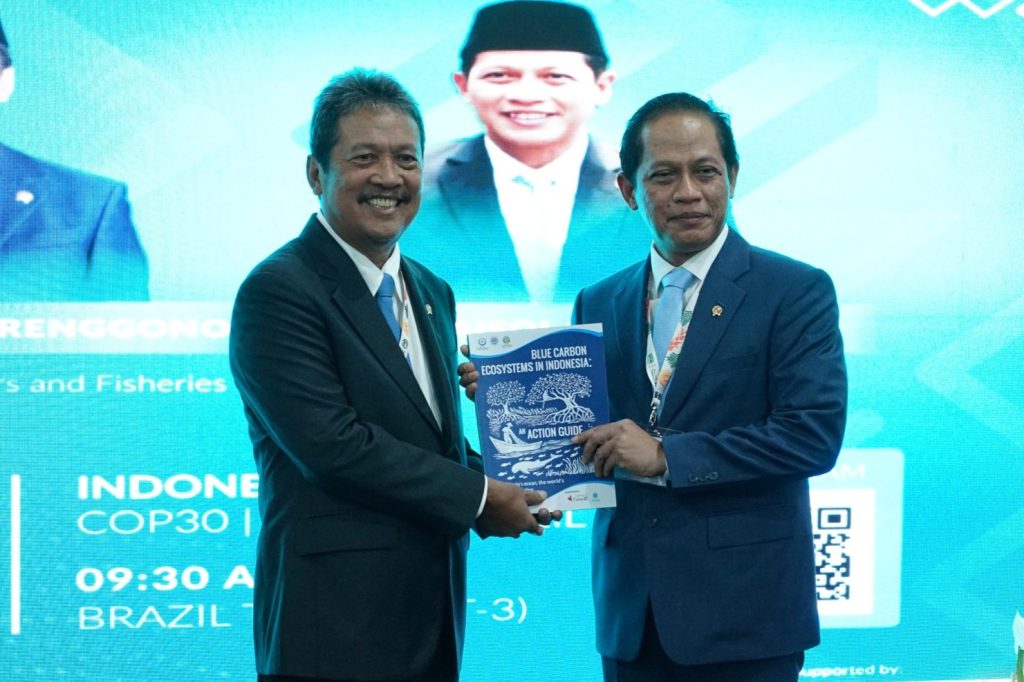
Belém, Brazil, 17 November 2025,
Monday at the Indonesia Pavilion marked a shift from sectoral work to systemic integration. The dialogue on 17 November moved beyond the traditional boundaries of climate negotiations, demonstrating how Indonesia is merging its marine and terrestrial strategies, aligning public ambition with private capital, and empowering grassroots communities to become owners of the transition.
From the launch of a historic Blue Carbon roadmap to the derisking of billion dollar energy investments. Day eight sessions illustrated that Indonesia’s path to Net Zero is paved with collaboration, transparency, and inclusivity.
Here are the key takeaways from the Indonesia Pavilion sessions on Monday, 17 November 2025 :
1. The Blue Carbon Ecosystem : Merging Ecology and Livelihoods (Sessions C1 and I3)
The day began with a landmark moment of institutional unity in Session C1, titled Tracking Blue Carbon in NDCs: Systems & Coalitions. Breaking down the silos, the Ministry of Marine Affairs and Fisheries (MMAF) and the Ministry of Environment (MoE) jointly launched the Indonesia Blue Carbon Ecosystem Roadmap and Action Guide. This roadmap is not just a document, it is a practical manual for integrating coastal ecosystems specifically seagrass and mangroves into Indonesia’s national climate targets in Second Nationally Determined Contribution (SNDC). The C1 session also discussed about :
- Data Integration : The initiative unifies fragmented data into a single national database, ensuring that blue carbon actions are measured, reported, and verified (MRV) through the National Registry System (SRN) .
- Global Significance : Panelists highlighted that ocean based solutions could close up to one third of the global emissions gap. Minister Sakti Wahyu Trenggono stated, “From Indonesia’s rich oceans and forests we offer climate solutions for a more sustainable future”.
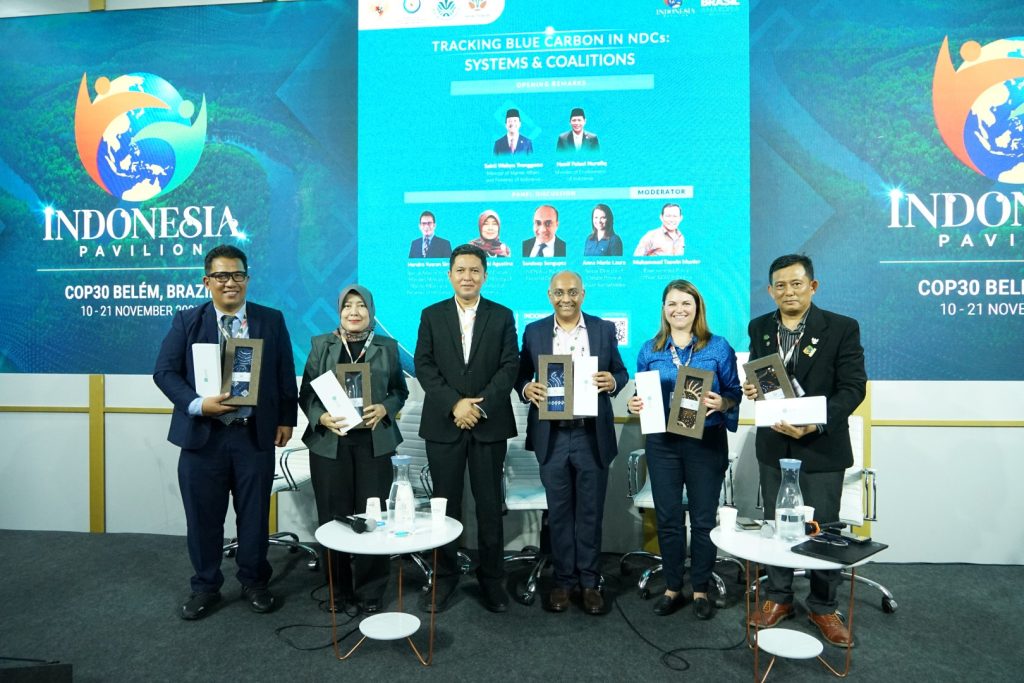
Tracking Blue Carbon in NDCs : Systems & Coalitions (Session C1)
The conversation deepened in Session I3, Blue Food Futures : Youth and Multi-Stakeholder Action for Sustainability, which humanized the technical roadmap. Prof. Gregg Walker argued that Blue Food must be framed not just as a mitigation tool, but as a resilience strategy for coastal communities. Key points from this session :
- The Human Element : Mailton Silva dos Santos, an Indigenous youth leader from the Amazon, provided the day’s most poignant reminder, he stressed that conservation cannot succeed without securing the rights of the people living within these ecosystems. Yuiko Mitani from The Climate Reality Japan urged for a holistic approach that values biodiversity and livelihoods. She also warned, “We do not want to talk about seaweed bed restoration just as sequestering blue carbon because then that is easily utilized as greenwashing”.
- Infrastructure Gaps : Diah Lestari from Desa Bumi highlighted the practical needs of these communities, noting that energy is connecting food security to economic stability. She showcased how solar powered cold storage is transforming subsistence fishing into sustainable businesses.
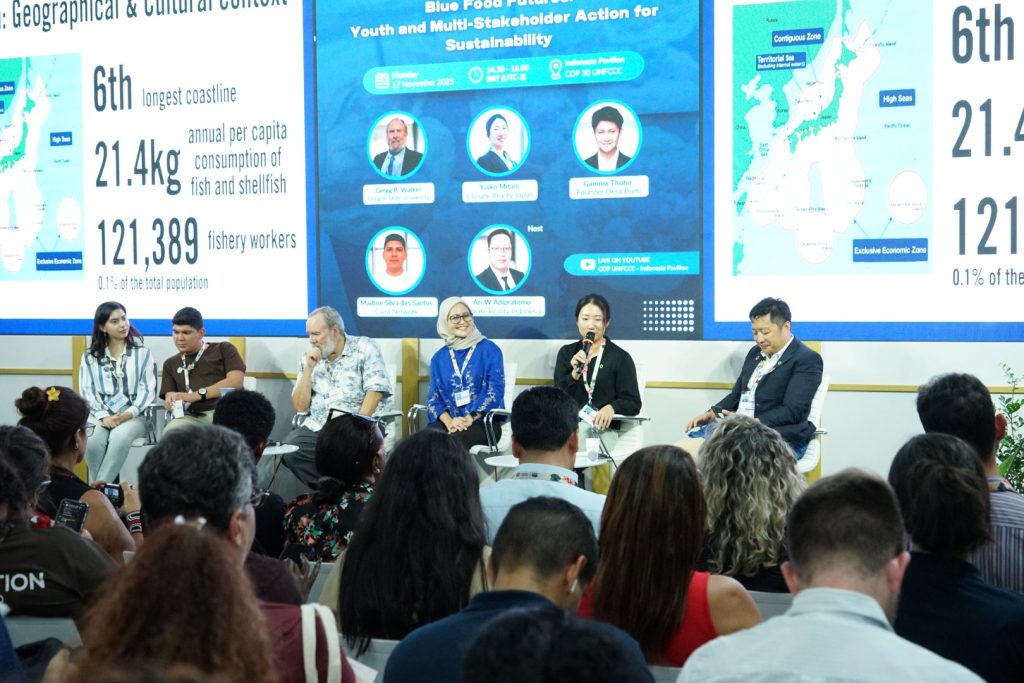
Blue Food Futures : Youth and Multi-Stakeholder Action for Sustainability (Session I3)
2. Financing more ambitious renewable energy development in Indonesia (Session D3)
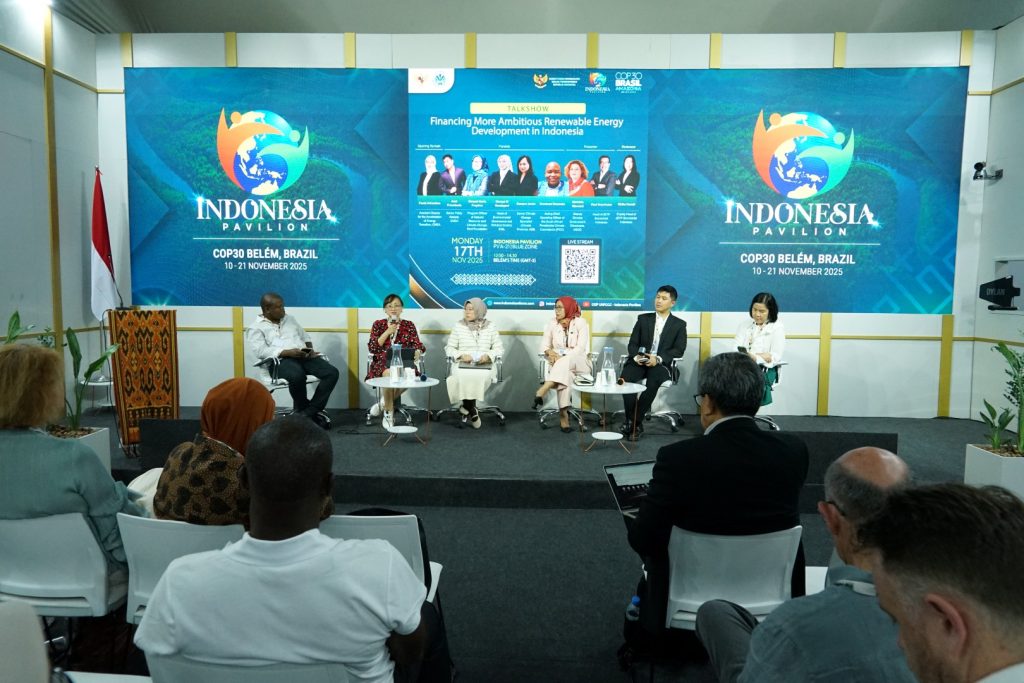
While the blue economy focused on resilience, Session D3 – Financing more ambitious renewable energy development in Indonesia tackled the sheer scale of financing required for Indonesia’s energy transition. The country faces a dual challenge: achieving 8% economic growth while reaching Net Zero Emissions by 2060.
Despite the USD 21.4 billion mobilized by the Just Energy Transition Partnership (JETP), the power sector alone requires an estimated USD 100 billion over the next decade. Paul Butarbutar from the JETP Secretariat highlighted an urgent gap of approximately USD 80 billion that must be filled by private capital. International partners proposed concrete financial engineering to attract this capital :
- OECD Strategy : Mathilde Mesnard recommended Credit Risk Guarantees and first loss funds to mitigate the hesitation of private banks.
- ADB Success story : The Asian Development Bank showcased the power of blended finance, where USD 270 million in concessional funds successfully leveraged USD 3.5 billion in private investment, a high leverage model for future projects.
Crucially, the session emphasized that finance must serve the people. Dumisani Nxumalo from South Africa’s Presidential Climate Commission warned, “Nothing for us without us” advocating for social ownership of renewable energy assets to ensure the transition is politically and socially sustainable.
3. Engaging Non-Party Stakeholders for Implementation on Climate Transparency (Session H3)
Transparency is the bedrock of international trust, and Session H3, Engaging Non-Party Stakeholders for Implementation on Climate Transparency explored how Indonesia is strengthening its data integrity through Non Party Stakeholders (NPS). The government acknowledged that it cannot measure everything alone. Rolly Leatemia introduced the Climate Transparency Hub (CTH), designed to bridge the gap between grassroots actions and national reporting. Standardization is important. CTH hub provides technical guidance to Civil Society Organizations (CSOs) so their climate data meets national standards and can be integrated into the National Registry System (SRN).
This session also highlight about President Regulation no 110/2025. Government officials confirmed that new regulations explicitly recognize the role of NPS in supporting national GHG inventories. While, Nala Amirah from Green Welfare Indonesia shifted the focus to the next generation. She argued that data literacy is a critical skill for youth, enabling them to move beyond activism to substantive participation in climate governance and the emerging green job market.
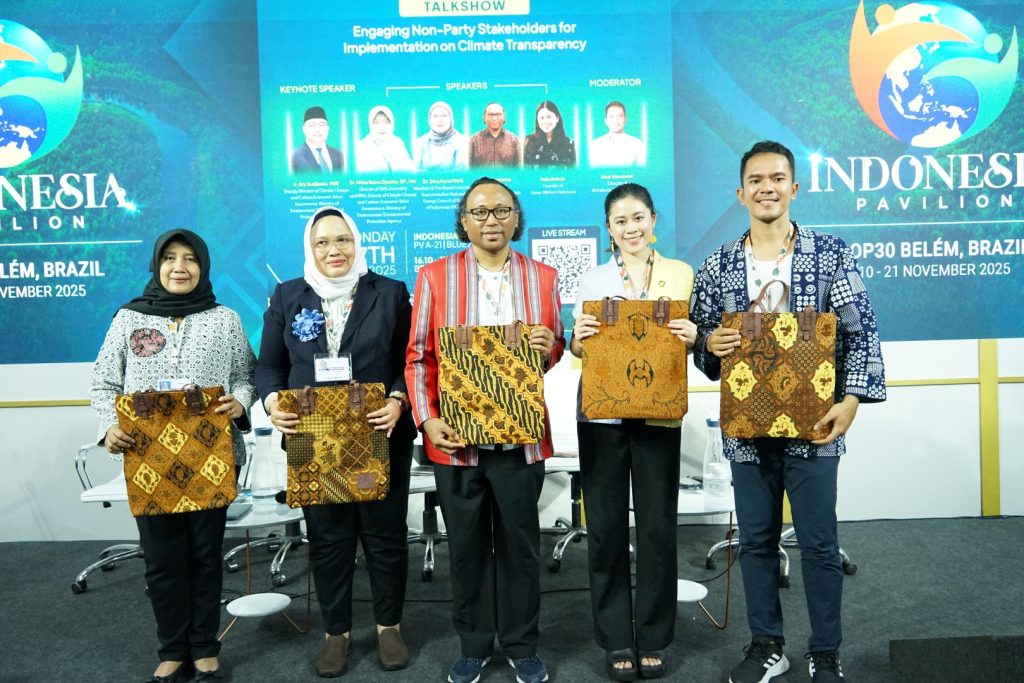
Engaging Non-Party Stakeholders for Implementation on Climate Transparency (Session H3)
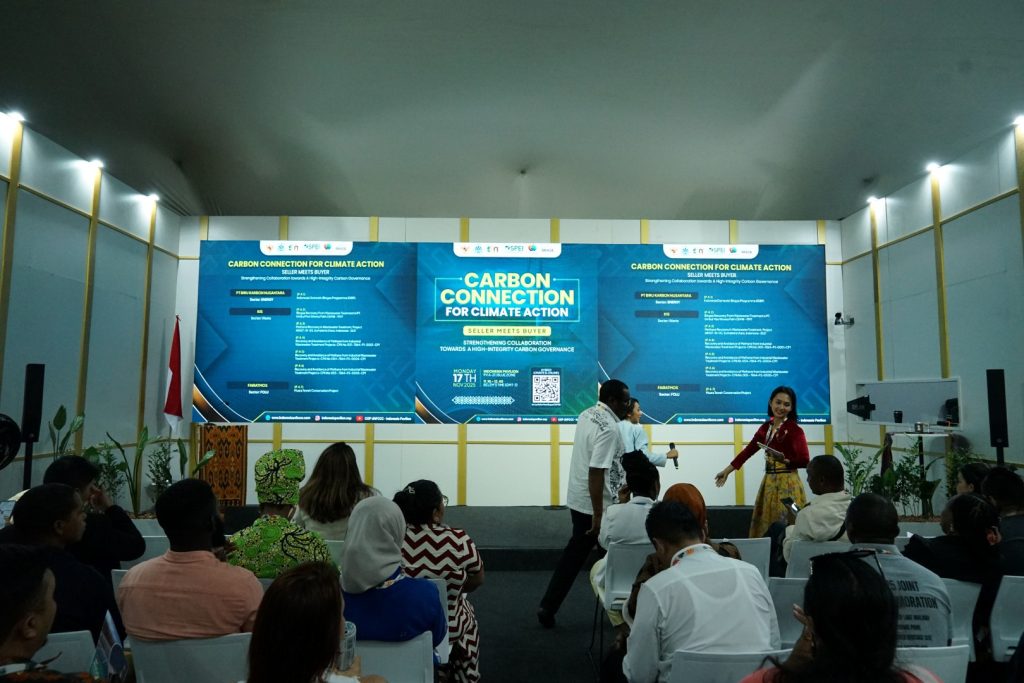
4. Carbon Connection for Climate Action : Seller Meets Buyer Session
Carbon Connection for Climate Action : Seller Meets Buyer Session proved that the carbon market is thriving beyond just forestry. Project developers showcased tangible solutions, turning palm oil waste into BioCNG fuel and converting household waste into biogas. A highlight was the signing of a Letter of Intent between Fairatmos and South Pole, signaling strong international demand for high-integrity forest conservation projects in Kalimantan.
This session highlight :
- Waste to Energy : PT Biru Karbon Nusantara presented its domestic biogas program, which has installed nearly 30,000 units, reducing over 584,000 tons of CO2e while providing organic fertilizer to farmers. On an industrial scale, KIS Group is converting palm oil waste (POME) into BioCNG, supplying renewable fuel to multinational company like Unilever .
- Forest Integrity : Fairatmos unveiled the Muara Teweh Conservation project, which transitions a 250,000-hectare logging concession into a protected area. The session featured the signing of a Letter of Intent with South Pole, signaling strong global market confidence in the integrity of Indonesian forest projects.
The message from Day 8. Indonesia Pavilion was a full of convergence ideas and actions by unifying marine and terrestrial policies, creating financial instruments to de-risk the energy transition, and building a transparent data ecosystem that includes youth and NGOs. Indonesia is proving that its climate strategy is not just ambitious, it is actionable, inclusive, and ready for investment.