
Belém, Brazil, 19 November 2025,
On the tenth day of the conference, the Indonesia Pavilion focus the discussion to the climate change solution implementation. The discussions on Wednesday, November 19, reveal the complex system required to save a planet teetering on the edge. The sessions moved beyond broad commitments to specific, measurable implementation strategies, covering from high tech audits of coral reefs to the economics of retiring coal plants.
Indonesia Pavilion have interesting topics, from the financial of decarbonizing industrial power to the invisible threat of open waste burning. Indonesia Pavilion sessions covering Coastal Ecosystems (C2), Coal Transitions (D6), Circular Economy (F2), and Carbon Markets (Carbon Connection for Climate Action) painted a picture of Indonesia grappling with the Triple Planetary Crisis through rigorous policy and market innovation.
Here are the key takeaways from the Indonesia Pavilion sessions on Wednesday, 19 November 2025 :
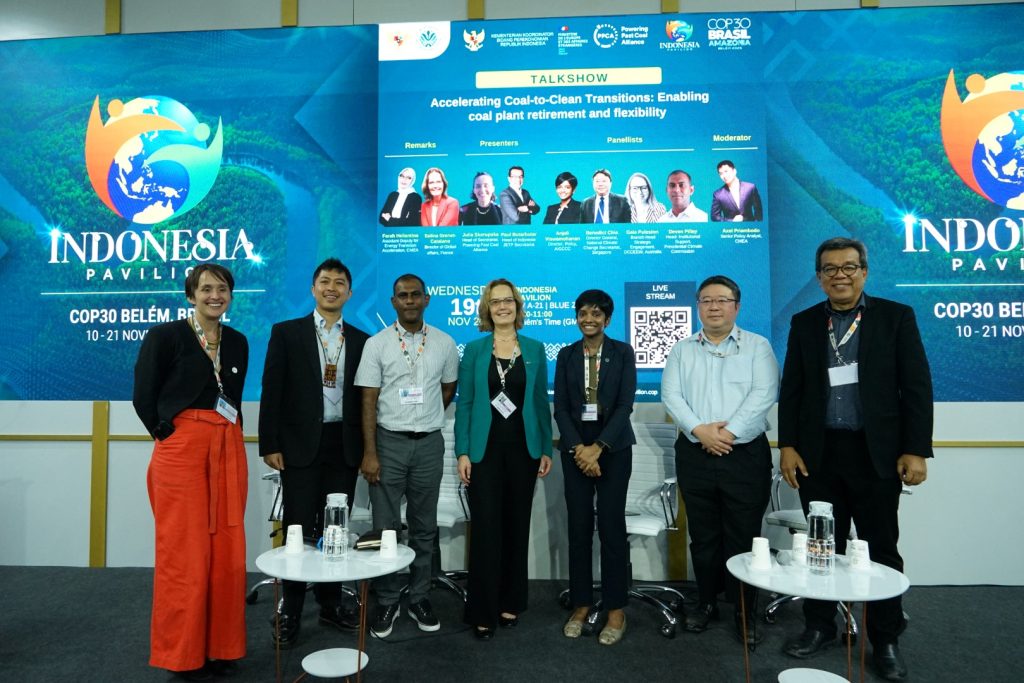
1. Accelerating Coal-to-Clean Transition in Southeast Asia : Enabling Coal Plant Retirement and Flexibility (Session D6)
In Session D6, Accelerating Coal-to-Clean Transition in Southeast Asia: Enabling Coal Plant Retirement and Flexibility, policymakers addressed the complex issue of transitioning from coal to clean energy. Indonesia emphasized that flexibility in coal plant operations must be a time bound bridge, not a permanent state. The goal is clear : decrease power sector emissions by 2035 and Net Zero by 2060. “Flexibility cannot be an excuse to prolong the life of coal plants indefinitely,” stated Farah Heliantina (Coordinating Ministry for Economic Affairs), reinforcing Indonesia’s commitment to genuine decarbonization.
This session also addressed the Captive Power of Indonesia’s energy transition. These are off grid coal plants powering major industrial estates, particularly in the nickel sector. This session also highlighted the following points :
- The Scale of the Problem : Paul Butarbutar from the JETP Secretariat revealed new data showing 9 GW of captive power currently in operation. To transition these industrial zones to renewables requires an estimated investment of USD 6 billion annually until 2030.
- Defining Flexibility : The session introduced the concept of coal flexibility, running plants at lower outputs to accommodate renewables as a necessary interim step. However, Farah Heliantina from the Coordinating Ministry for Economic Affairs drew a firm line, flexibility must be a time bound bridge, not a permanent state. Every hour of reduced coal operation must correspond to an increase in clean energy uptake .
- Global Readiness : The Coal Transition Commission launched its Growing the Pipeline report, identifying that one third of the global coal fleet is financially ready for early retirement today, provided the right mechanisms are in place.
2. Carbon Connection for Climate Action : Seller Meets Buyer Session
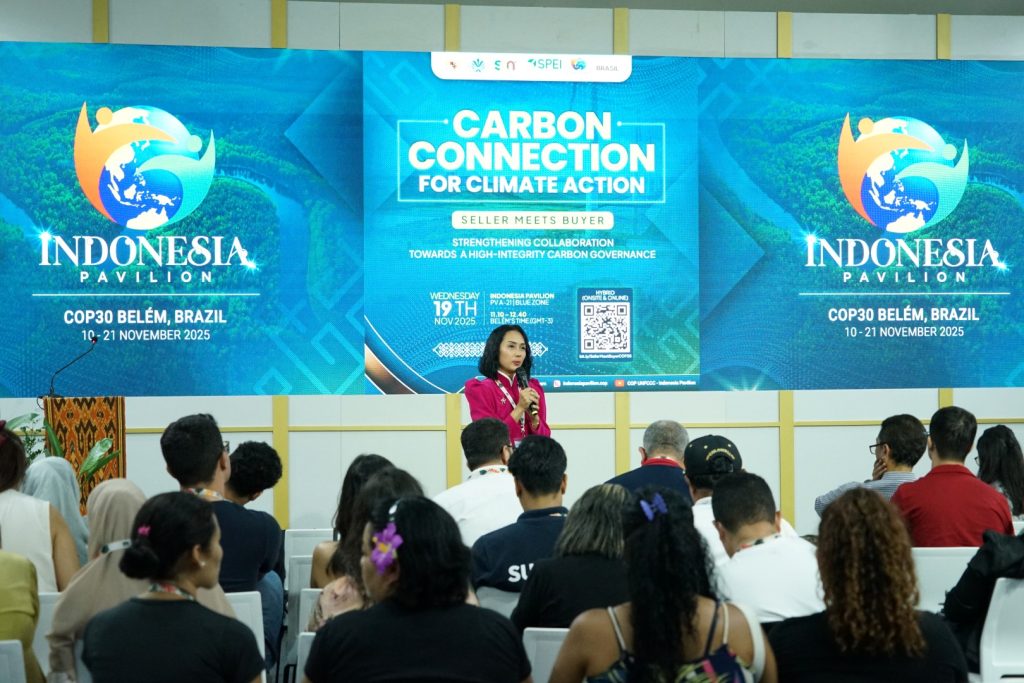
This session showcased commercially viable solutions for methane reduction. KIS Group presented its success in converting palm oil waste into BioCNG for global clients like Unilever, while Nagata Bio Energi demonstrated operational biogas power plants supplying the national grid. These projects prove that mitigating methane is not just good for the planet, it is a bankable business model
Carbon Connection for Climate Action : Seller Meets Buyer Session provided the proof of concept that circularity can be profitable. The session focused on the agro-industrial sector.
- KIS Group demonstrated that methane capture is no longer a pilot project. Their commercial scale BioCNG plants in North Sumatra are supplying renewable fuel to multinational company like Unilever, effectively decarbonizing the supply chain while generating high integrity carbon credits.
- Nagata Bio Energi showcased the scalability of biogas to power. Their 2.4 MW plant in South Kalimantan has been supplying the state grid (PLN) since 2020, replacing diesel and mitigating ~35,000 tons of CO2e annually.
3. Coral Reefs and Climate Change Mitigation – From Local Actions to Global Collaboration (Session C2)
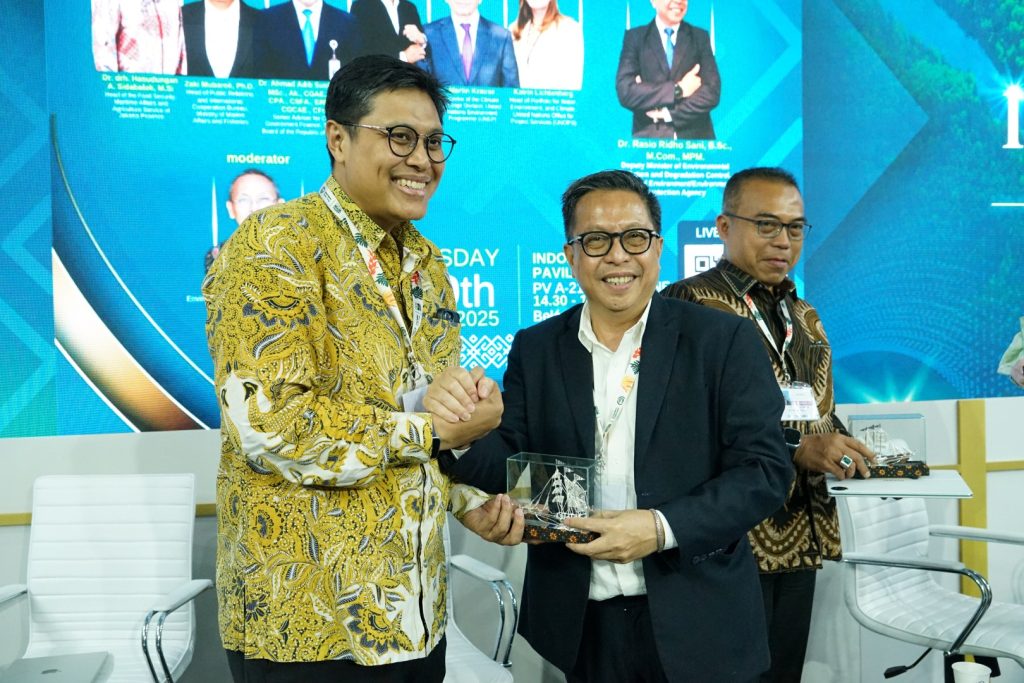
Session C2, Coral Reefs and Climate Change Mitigation – From Local Actions to Global Collaboration, highlighted a groundbreaking approach to accountability. The Audit Board of Indonesia (BPK) revealed it is now using underwater drones and satellite geo-tagging to verify marine restoration projects. This impact oriented audit ensures that investments in mangroves and coral reefs deliver real environmental results.
Martin Krause from UNEP warned that coral reefs are facing the planet’s first climate tipping point, with 90% at risk of vanishing if warming exceeds 1.5°C. “If global warming exceeds 1.5°C, up to 90% of coral reefs could vanish. Protecting them is a race against time,” warned Martin Krause (UNEP).
In response, Indonesia presented a governance strategy defined by Ecology as Commander principle. This session also highlights the following :
- Policy Shift : Zaki Mubarok from the Ministry of Marine Affairs and Fisheries explained that this principle ensures economic activities do not outpace the ocean’s regenerative capacity. This underpins the massive national target to protect 30% of marine areas by 2045.
- Auditing Impact : While technology plays a role, the Audit Board of Indonesia (BPK) emphasized the human and procedural side of accountability. Dr. Ahmad Adib Susilo highlighted BPK’s adoption of ISSAI 3000 standards to conduct impact oriented audits. This ensures that the billions flowing into mangrove and reef restoration are not just tracked on spreadsheets but verified against actual environmental recovery.
- Regional Unity : The session also showcased the South China Sea Strategic Action Programme, a six-nation collaboration restoring habitats across borders, proving that ecological governance transcends national lines.

Coral Reefs and Climate Change Mitigation – From Local Actions to Global Collaboration (Session C2)
4. Circular Economy and Plastic Circularity (Session F2)
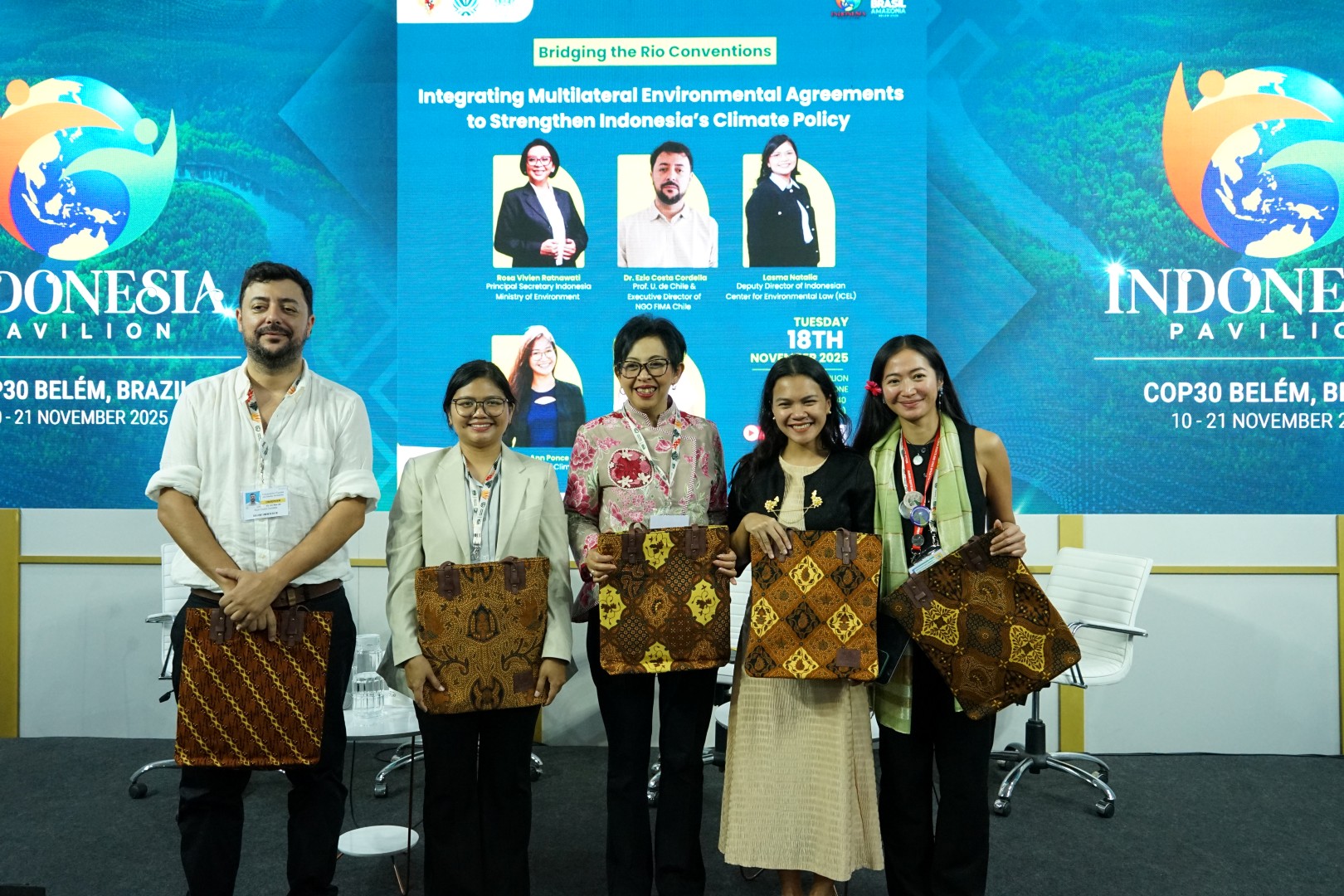
Session F2, Circular Economy and Plastic Circularity, tackled the climate impact of waste. Experts identified open burning as a hidden climate enemy, contributing massive greenhouse gas emissions. The session revealed a paradox, while Indonesia has ample recycling capacity, factories sit idle due to a lack of sorted waste. The solution lies in the upcoming Extended Producer Responsibility (EPR) regulations to force a shift in packaging design and collection. “We must stop simply ‘collecting, transporting, and dumping’ waste and start treating it as a valuable resource,” emphasized Rosa Vivien Ratnawati from Ministry of Environment in her keynote speech.
The session also brought forward the following key points :
- The Idle Capacity : Hadiyan Fariz Azhar from ADUPI revealed a striking paradox, Indonesia’s recycling industry has a capacity of 3 million tons, yet nearly half sits idle. It happened because of shortage of clean, sorted feedstock. The industry is looking for plastic waste while mountains of it pollute the environment .
- The Invisible Emitter : Prof. Emenda Sembiring from ITB highlighted a deadly alternative to recycling, open burning. This practice alone contributes 4,000–5,000 Gg CO2e annually. The panel concluded that stopping open burning is the single most effective immediate climate intervention in the waste sector .
- Regulatory Fix : To bridge the gap, the government is accelerating Extended Producer Responsibility (EPR) regulations, forcing manufacturers to take financial responsibility for their packaging waste, effectively funding the collection systems needed to feed the recycling plants.
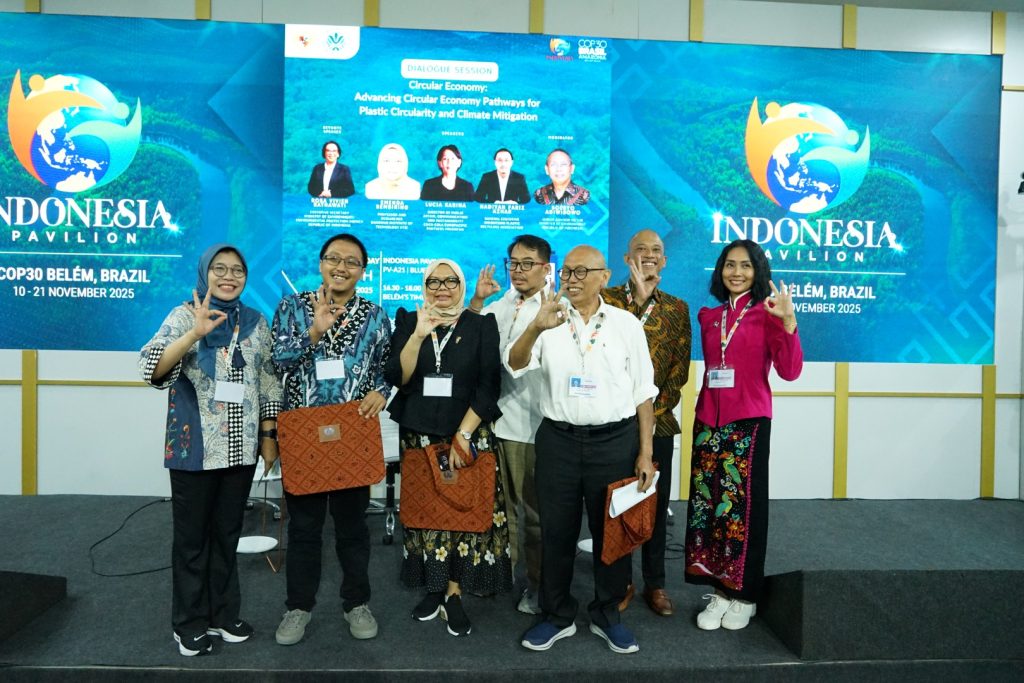
Day 10 at the Indonesia Pavilion showcased a clear commitment to driving systemic interventions across multiple sectors. From imposing strict audit standards on blue carbon projects, to outlining definitive timelines for coal flexibility, and addressing the long standing inefficiencies in plastic recycling supply chains. Indonesia is demonstrating that it is prepared to undertake the rigorous, detailed work required to fulfill its climate commitments. These efforts reflect a shift toward more transparent, accountable, and science based policy implementation. Indonesia is ready not only to set ambitious targets, but also to operationalize them in ways that genuinely move the action to tackle climate change.