
Belém, Brazil, 15 November 2025,
Day 6 at the Indonesia Pavilion COP30, was defined by structural transformation. The discussions shifted from project level initiatives to the foundational pillars of climate action, legal enforcement, carbon market regulations, and innovative financing models. Here are the key takeaways from a day focused on building a robust ecosystem for green growth :
1. Financing the Peatlands and a 7 Year Financing Cycle (Session B7)
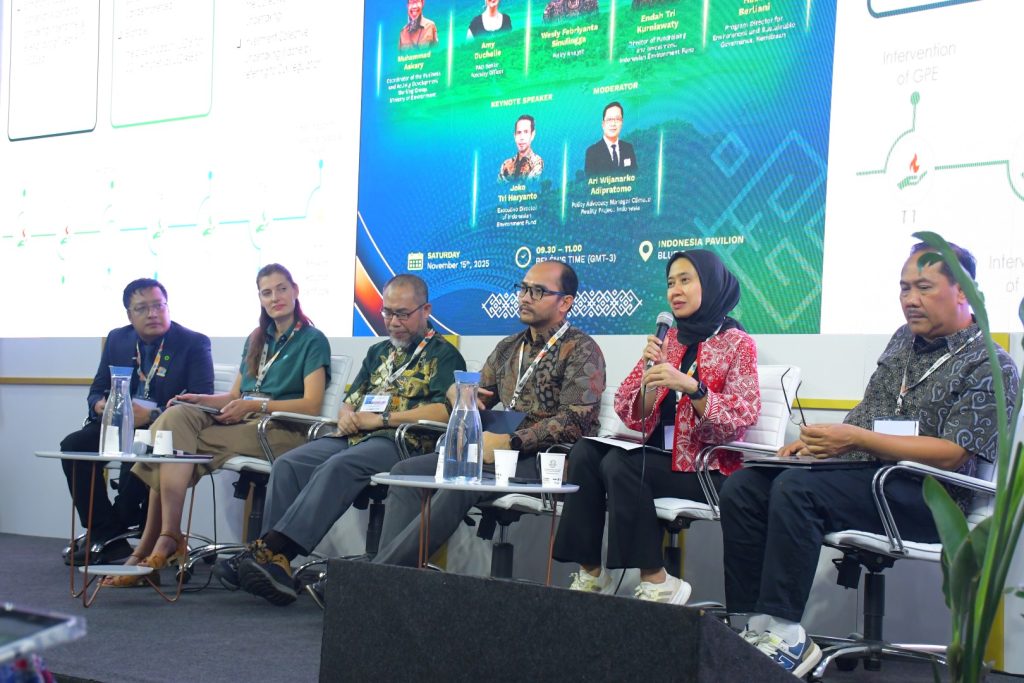
In Session B7, the focus was on bridging the massive financing gap for peatland restoration. With an annual need of USD 94.5 billion, the government is turning to blended finance. The Indonesian Environment Fund (BPDLH) unveiled a 7 year financing cycle designed to turn carbon reduction certificates into underlying assets for investment products. The Ministry of Environment also reported success with the “3R” approach (Rewetting, Revegetation, Revitalization), which has drastically reduced burnt areas compared to 2015 levels.
Session B7 tackled the financial reality. Indonesia faces a funding gap where the state budget covers only ~12.9% of the USD 94.5 billion needed annually for climate targets. The Green Peatland Economy to bridge this gap, the Indonesian Environment Fund (BPDLH) unveiled a sophisticated 7-Year Financing Cycle for peatland restoration :
- The Mechanism : It begins with upfront investment for rewetting and replanting (Years 1-2), followed by rigorous MRV (Monitoring, Reporting, Verification) in Years 3 and 7.
- The Exit : The certified emission reductions are then monetized as underlying assets for Collective Investment Undertakings (KIK), allowing investors to enter and creating a revolving fund for future projects .
Partners like FAO and Kemitraan emphasized that this financial engineering must be paired with community tenure security.
1. The Regulatian : Carbon Markets & Climate Justice (Sessions A4 and G1)
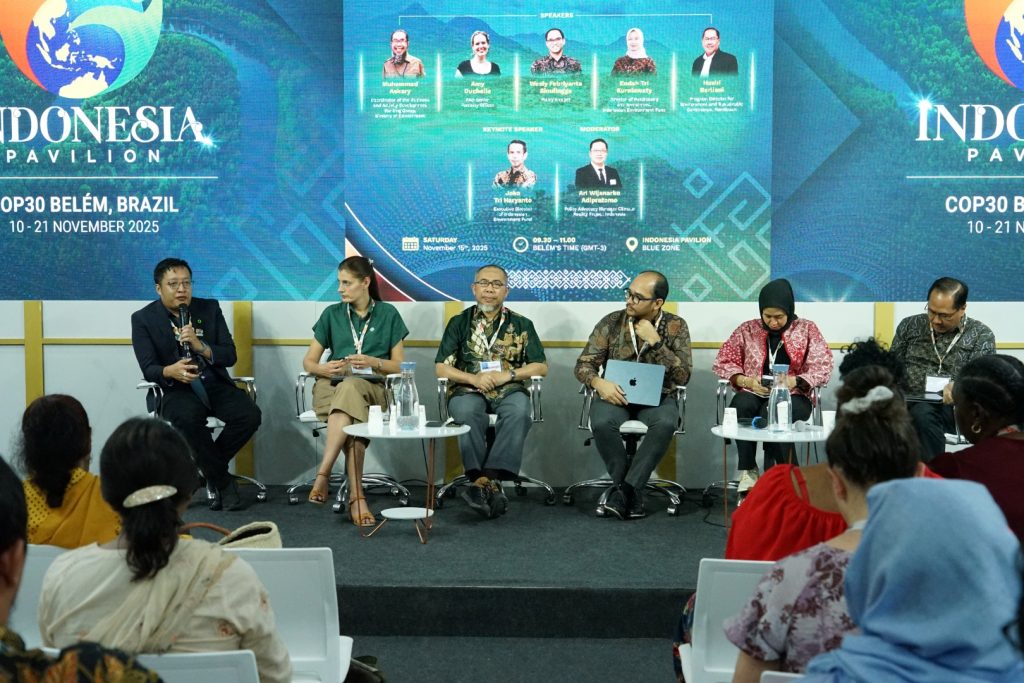
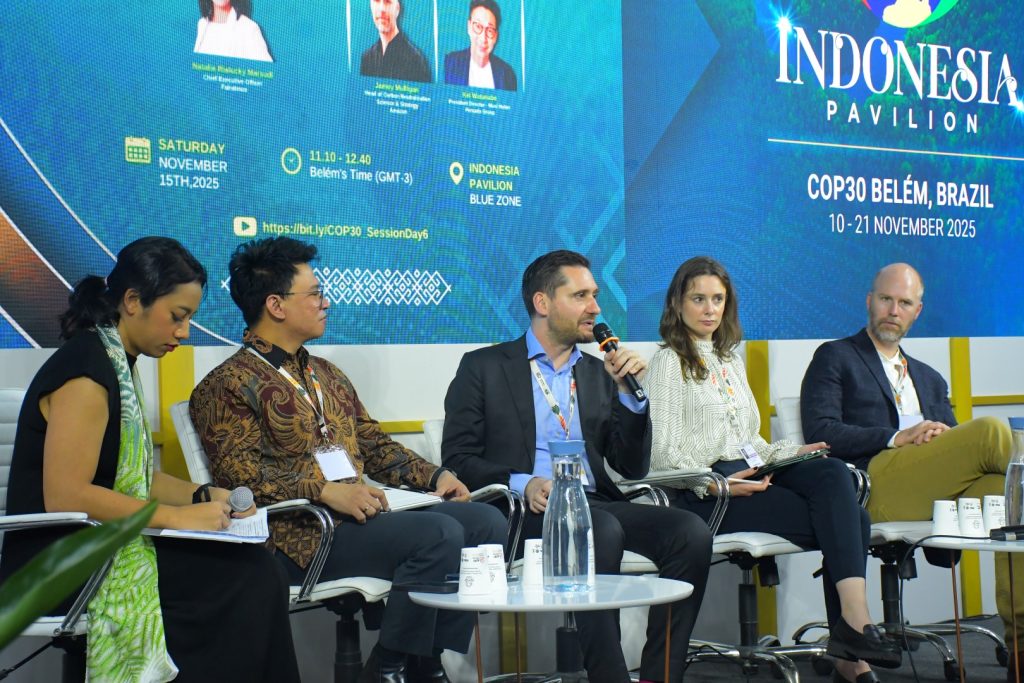
Session Navigating Indonesia’s Carbon Market: Challenges, Opportunities and the Road Ahead (session A4) marked a turning point with the global socialization of the new Presidential Regulation No. 110/2025. This regulation officially opens Indonesia’s Voluntary Carbon Market (VCM) to the world, decentralizing authority to simplify processes for investors. A major highlight was the alignment with global standards. The Integrity Council for the Voluntary Carbon Market (ICVCM) is partnering with Indonesia to ensuring credits meet high-integrity benchmarks.
Government officials declared Presidential Regulation (Perpres) No. 110/2025 regulation serves as the foundation for Indonesia to emerge as a global carbon trading hub. A4 session discussion highlight :
- Voluntary Market : Lufaldy Ernanda from the OJK confirmed that the regulation officially opens the Voluntary Carbon Market (VCM) fully, decentralizing authority to technical ministries to streamline approvals .
- Financial Innovation : A groundbreaking feature allows carbon funds to be used as collateral for bank loans, enabling local communities to access capital for sustainable projects.
- Global Reaction : Major buyers like Amazon welcomed the move, with Jamey Mulligan stating that the voluntary market is “here to stay” but emphasizing the need for systemic solutions rather than isolated offsets . Meanwhile, the Integrity Council for the Voluntary Carbon Market (ICVCM) formalized a partnership to align Indonesia’s forestry credits with the Core Carbon Principles (CCP), ensuring high integrity.
Achieving Climate Justice from Environmental Law Enforcement: Lessons Learned from Indonesia (Session G1). Session G1 showcased Indonesia’s aggressive legal stance on environmental protection. The Supreme Court highlighted its shift toward Restorative Justice, where court verdicts mandate ecosystem recovery rather than just fines. Meanwhile, the Ministry of Environment emphasized the use of Strict Liability to hold polluters accountable without needing to prove intent.
Markets require legal certainty, and Session G1 demonstrated that Indonesia’s judiciary is ready to enforce it. G1 discussion highlight :
- Restorative Justice : Dr. Prim Haryadi from the Supreme Court revealed a shift in judicial philosophy. Under Supreme Court Regulation No. 1 of 2023, verdicts now mandate “restorative justice,” requiring offenders to physically restore ecosystems (e.g., rewetting peatlands) rather than just paying fines .
- Strict Liability : The Ministry of Environment reinforced its “Strict Liability” approach, allowing the state to hold polluters accountable without proving intent. This has already led to the sealing of 343 non-compliant landfills. The session was marked by a powerful statement from the Supreme Court: “When the law speaks, the forest breathes again. When justice acts, restoration begins”.
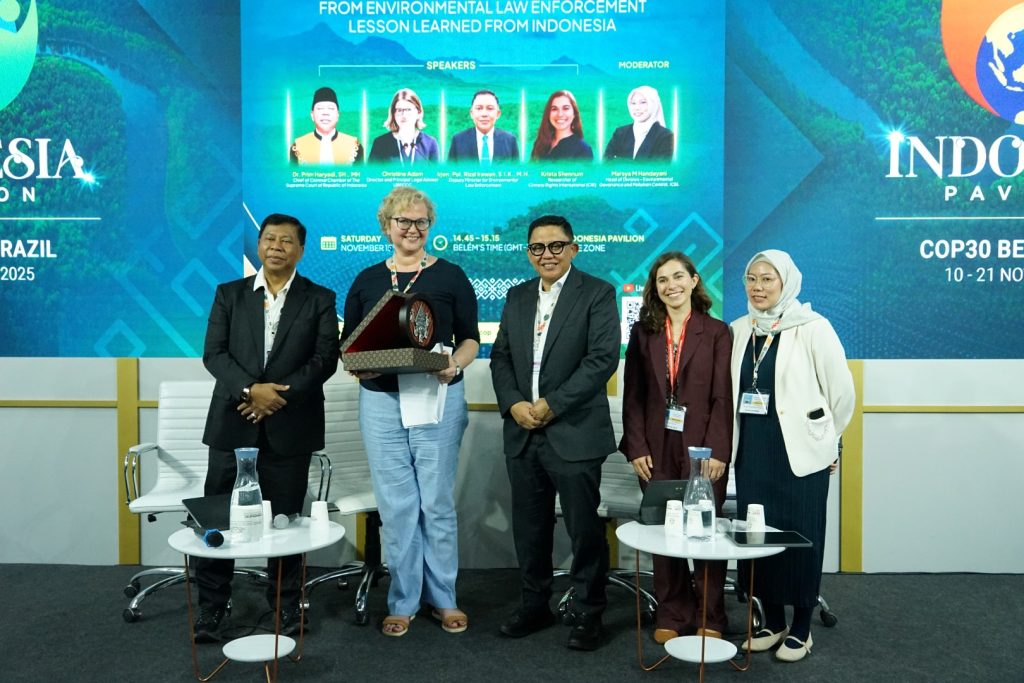
Achieving Climate Justice from Environmental Law Enforcement: Lessons Learned from Indonesia (Session G1)
3. The Industrial Pivot : Nexus & Circularity (Sessions D4 and E2)
The final sessions are the physical transformation of industry and infrastructure, covered in Sessions D4 and E2.
Advancing Water, Energy, and Food Security through the Second NDC towards Net Zero Emission 2060 (Session D4) This session explored the “Water Energy Food Nexus” to ensure that food security strategies do not derail climate goals. Highlights from this session :
- Decarbonizing Agriculture : Pupuk Kaltim presented its roadmap to Net Zero by 2050, which includes retrofitting ammonia plants and developing Green Ammonia capacity in West Papua to cut 6.1 million tons of CO2eq .
- Green Logistics : Pelindo showcased its Green Port initiative by providing Onshore Power Supply (OPS) to ships and electrifying equipment, they reduced fuel consumption by 38% in just one year (2023-2024).
Leveraging Technology and Innovation Ecosystems for Climate Impact (Session E2) This session discussed about waste impact to Climate Change. The Ministry of Environment announced a policy shift from disposal to utilization. Session E2 explored the industrial shift from pollution to potential. Major players demonstrated how technology is closing the production loop. For instance, Harita Nickel is converting mining tailings into iron products and artificial reefs, while Petrokimia Gresik is repurposing gypsum waste for cement production. Highlight from this session :
APRIL Group and APP Group showcased circularity in forestry, turning industrial sludge into boiler fuel and plastic residues into Refuse-Derived Fuel (RDF), aiming for 90% renewable energy use by 2030. Huayou Indonesia and Harita Nickel demonstrated how they are solving the “tailings” problem. Instead of ocean dumping, they utilize Dry Stack Tailing and convert nickel slag into construction bricks and artificial reefs .
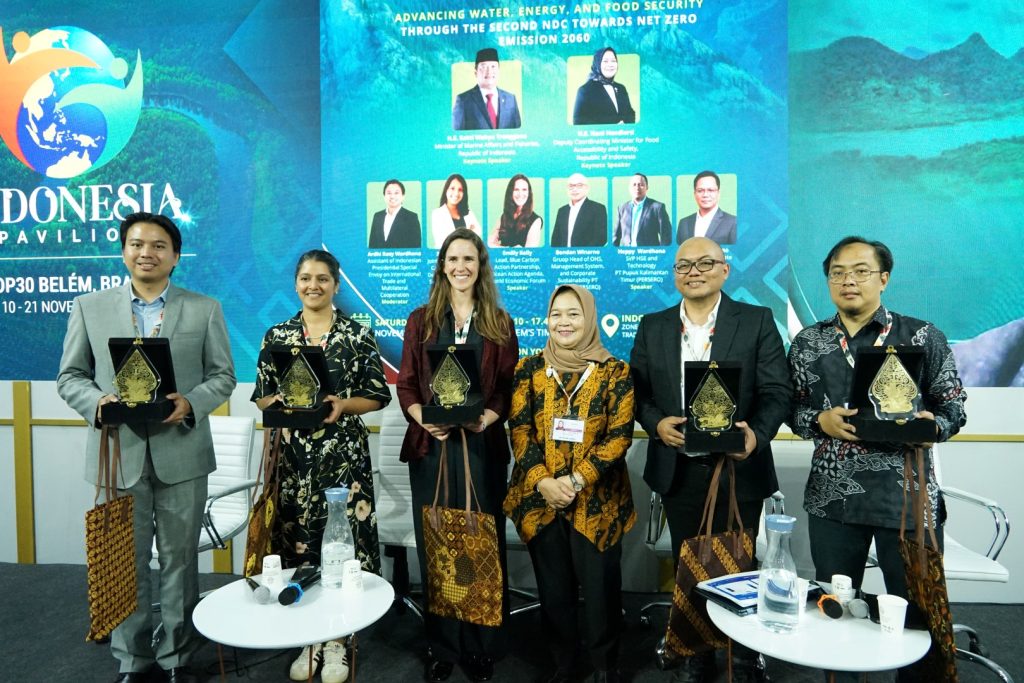
Advancing Water, Energy, and Food Security through the Second NDC towards Net Zero Emission 2060 (Session D4)
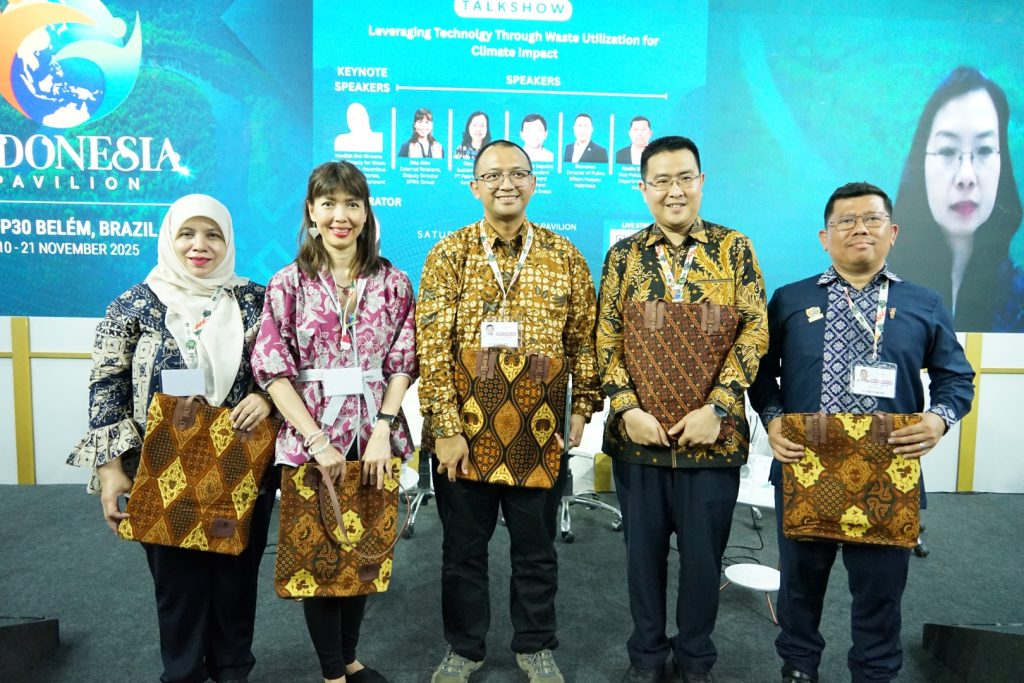
Leveraging Technology and Innovation Ecosystems for Climate Impact (Session E2)
The message from Day 6. Saturday’s sessions painted a picture of Indonesia moving from planning to execution by synchronizing legal enforcement (G1), market regulation (A4), innovative finance (B7), and industrial technology (D4, E2), Indonesia is building a comprehensive ecosystem where economic growth and environmental restoration reinforce one another.