
Belém, Brazil, 18 November 2025,
A singular theme emerged, the bridge between the ancient wisdom and the futuristic technology. The day’s sessions illustrated that successful climate action requires a sophisticated alliance between the traditional wisdom of Indigenous guardians and the rigorous oversight of modern auditors and satellites.
From the launch of digital twin technology for fire prevention to the legal recognition of rights to a healthy environment, Indonesia Pavilion sessions showcased Indonesia’s strategy to harmonize these diverse forces into a unified front against the climate crisis.
Here are the key takeaways from the Indonesia Pavilion sessions on Tuesday, 18 November 2025 :
1. The Guardians of the Forest : Manggala Agni and Indigenous Rights (Sessions B8 and I1)
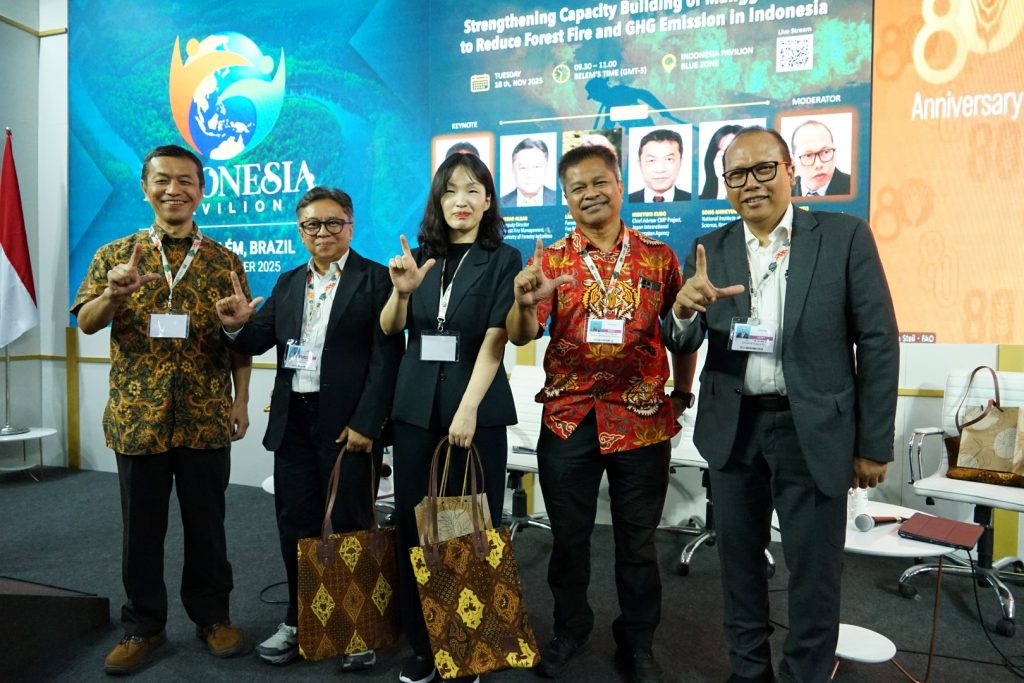
The technological solutions are supported by human guardians on the ground. Two sessions highlighted the dual role of state brigades and indigenous communities. The Ministry of Forestry showcased Manggala Agni, Indonesia’s forest fire brigade in session 8, Strengthening Capacity Building of Manggala Agni to Reduce Forest Fire and GHG Emission in Indonesia. The strategy is evolving, firefighters now wear “two hats” a command hat for suppression and a facilitation hat for community engagement. International support is robust, with the Korea Forest Service building a high-tech command center in South Sumatra and JICA training personnel in soft skills for community conflict resolution. “No one country could resolve fires problem without support and collaboration from other partners and countries,” said Ir. Thomas Nifinluri (Ministry of Forestry), welcoming support from FAO, Korea, and Japan to upgrade the Manggala Agni brigade’s capacity.
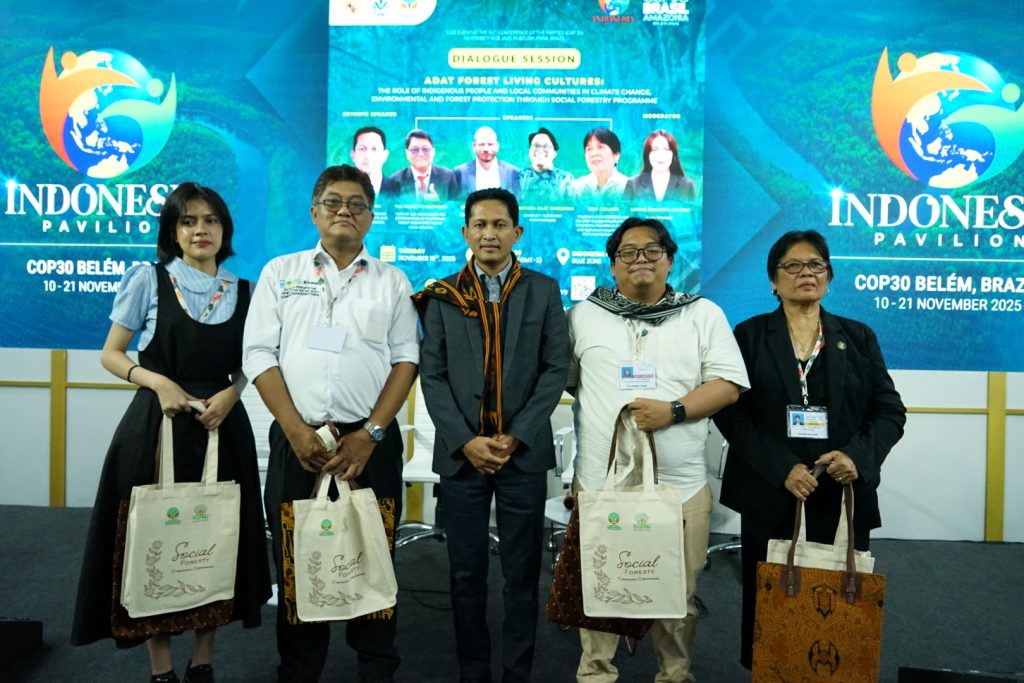
In session I1, Adat Forest Living Cultures: The Role of Adat Law People in Climate Change and Environmental and Forest Protection through Social Forestry Programme speakers argued that the most effective fire prevention often comes from ancient culture. Session I1 highlighted a powerful message, securing legal rights for Indigenous People is a cost-effective climate strategy. “Effective integration starts with recognizing their local knowledge as legally equal to state law, not just cultural add-ons,” emphasized Bimantara Adjie Wardhana (HuMa Indonesia), advocating for the wisdom of communities like the Ammatoa Kajang. Nida Collado from the Philippines also stated, “Let us protect what protects us” to show the importance of the forest.
The Ministry of Forestry announced a target to recognize 1.4 million hectares of Customary Forest (Hutan Adat) within four years, backed by a new dedicated task force . FAO research confirmed the wisdom of this approach, Customary Forests in Indonesia demonstrate lower average emissions and higher carbon removals than other land types.
2. The Role of Government and Organization in Addressing Climate Issues (Session H1)
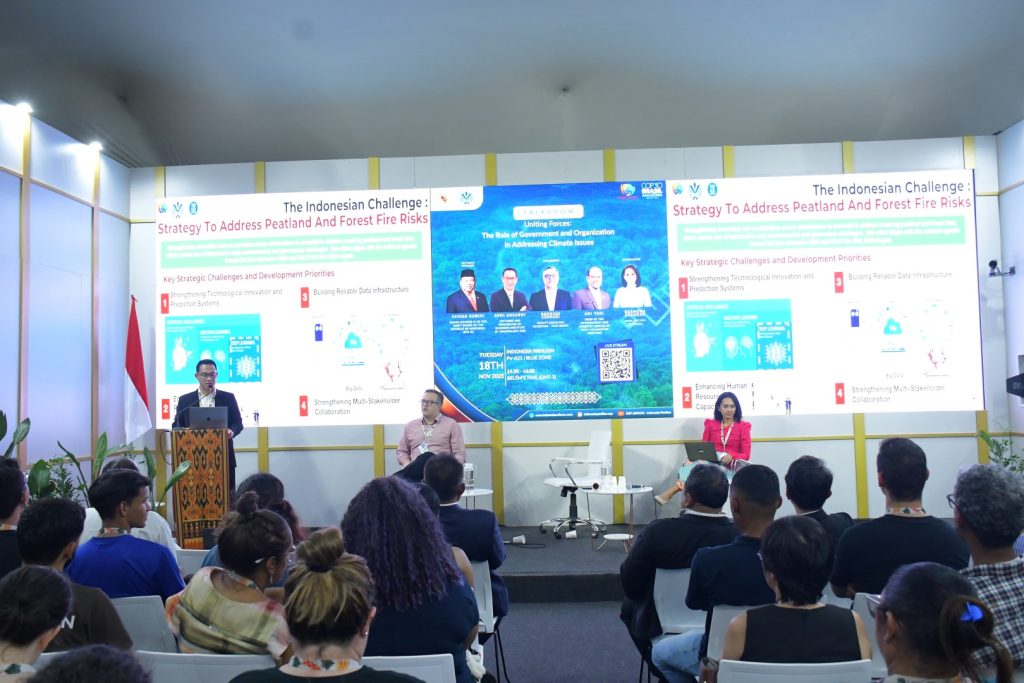
Session H1 titled The Role of Government and Organization in Addressing Climate Issues, brought together an unlikely alliance of supreme auditors and scientists. The Audit Board of Indonesia (BPK RI) called for rigorous Climate Performance Audits to ensure transparency in global climate finance. On the technical front, ITB introduced FORMS, a “Digital Twin” AI technology that creates digital replicas of peatlands to predict fire hotspots with >80% accuracy.
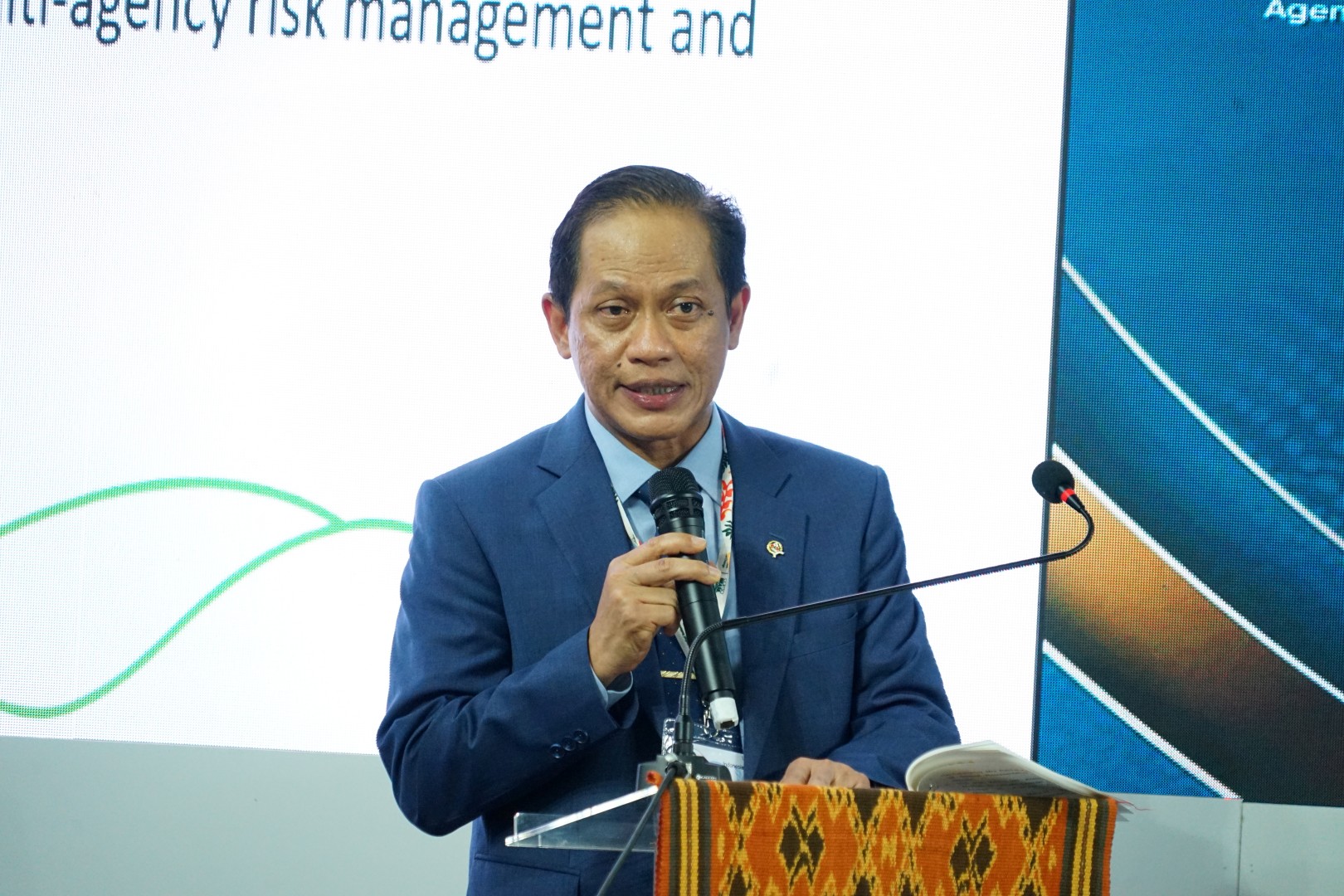
Drs. H. Fathan Subchi from the Audit Board of Indonesia (BPK RI) highlighted a groundbreaking domestic achievement, fiscal transfers based on forest cover performance have tripled from USD 1 billion in 2023 to USD 3.8 billion in 2024. He emphasized that climate performance audit must become the new pillar of global ambition, ensuring every dollar delivers measurable results.
While auditors track the money, scientists track the fires. Dr. Armi Susandi from ITB unveiled FORMS, a Digital Twin system that creates a real time digital replica of peatland ecosystems. Using AI and satellite fusion, it predicts fire hotspots with over 80% accuracy. This shifts the focus from reactive suppression to proactive prevention, allowing authorities to intervene before a spark becomes a massive forest fire.
3. Bridging the Rio Conventions : Integrating Multilateral Environmental Agreements to Strengthen Indonesia’s Climate Policy (Session G2)
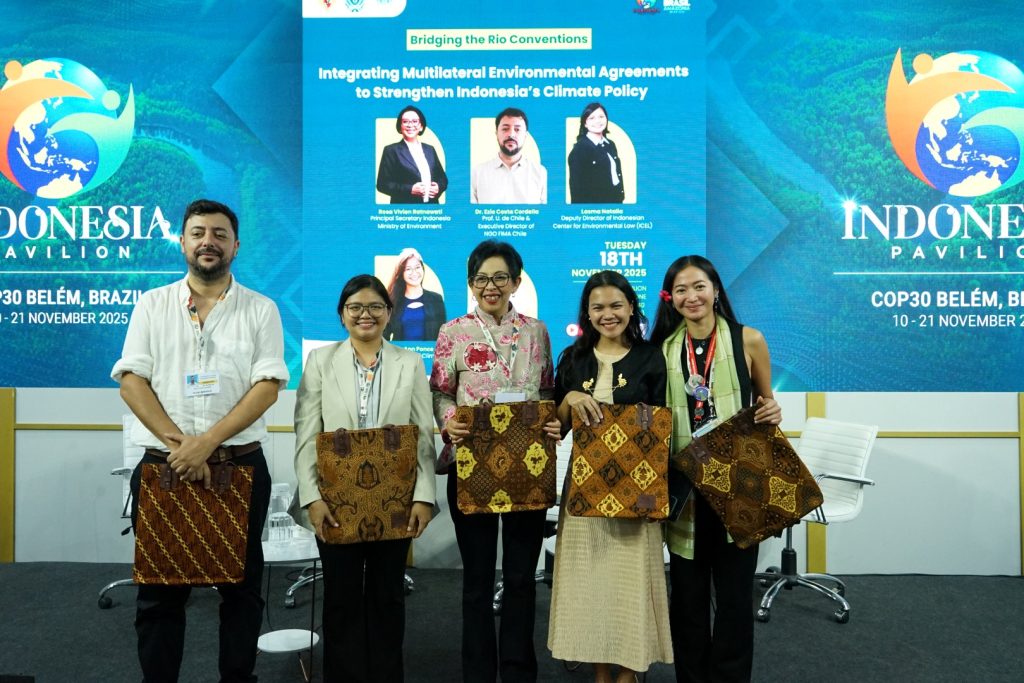
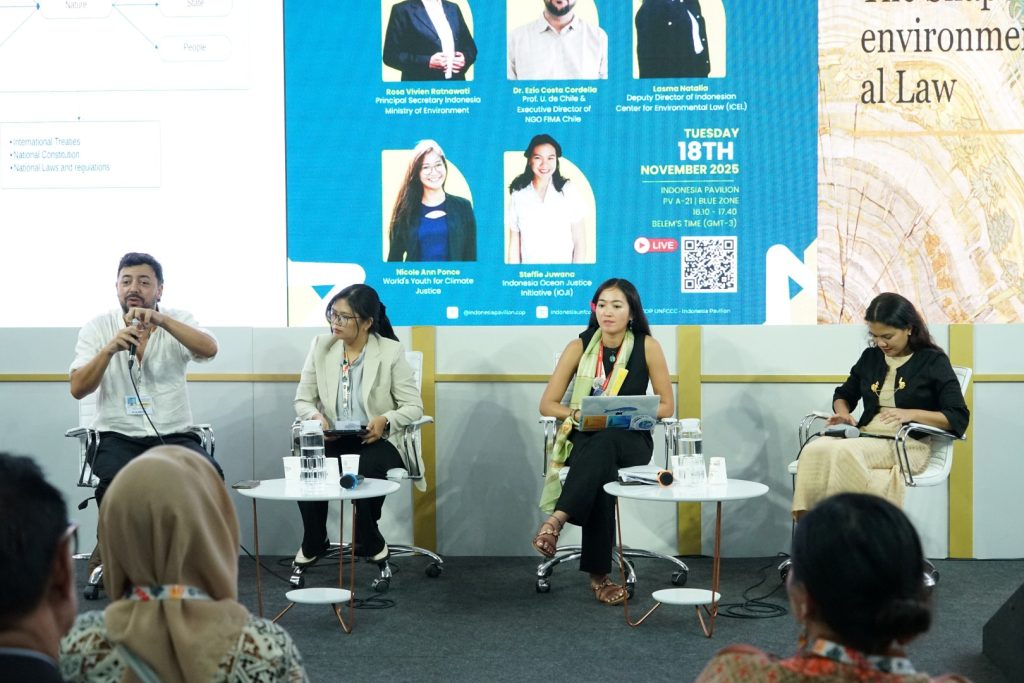
Connecting the dots between biodiversity, climate, and land is a legal challenge. Session G2, Bridging the Rio Conventions: Integrating Multilateral Environmental Agreements to Strengthen Indonesia’s Climate Policy tackled the silos that often separate these critical areas. One Integrated System Legal experts argued that the Triple Planetary Crisis cannot be solved with fragmented laws. Dr. Ezio Costa Cordella emphasized that international environmental law must be viewed as a single, interconnected system.
Youth advocate Nicole Ann Ponce (World’s Youth for Climate Justice) brought a message of urgency from the International Court of Justice (ICJ). The court’s recent clarification that state climate plans must align with the 1.5°C goal provides a legal red line, empowering civil society to hold governments accountable not just politically, but legally. “The law is clear. The science is clear. Now we need our states to act and politics has to catch up” urged Nicole Ann Ponce . The session highlighted the “Right to a Healthy Environment” as the legal bridge connecting these frameworks to human rights.
4. Carbon Connection for Climate Action : Seller Meets Buyer Session
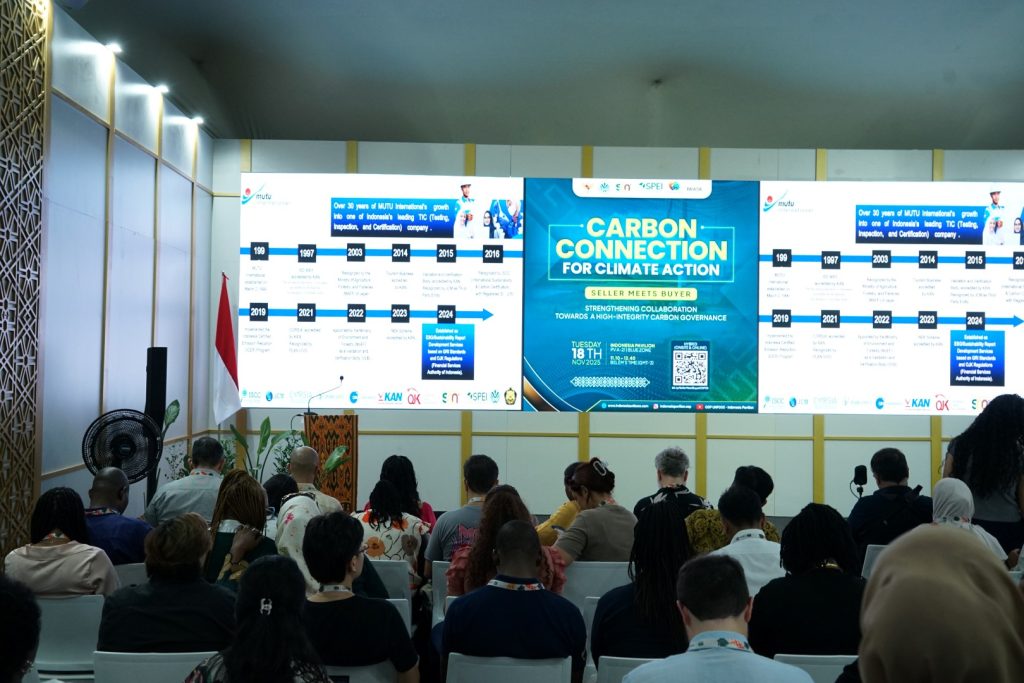
Carbon Connection for Climate Action : Seller Meets Buyer Session revealed how companies are turning environmental liabilities into assets. A standout project, Sercova in Maluku, is converting a massive active logging concession into a protected forest (“Log-to-Protect”), targeting high-integrity carbon certification. Meanwhile, Fairatmos and Gree Energy showcased solutions to capture methane from agricultural waste, turning pollution into profit.
Fairatmos and Gree Energy showcased solutions for the agro industry, converting palm oil waste and tapioca residue, major sources of methane, turn it into organic fertilizer and renewable biogas. These projects offer high integrity credits while addressing Scope 3 emissions for global supply chains. Meanwhile, In the forestry sector, PT Strata Pacific presented the Sercova project in Maluku, a pioneering Improved Forest Management initiative by voluntarily converting over 73,000 hectares of active logging concessions into protected forests, they target a reduction of 1 million tons of CO2e per year, proving that conservation can be a viable business model .
The sessions at the Indonesia Pavilion on November 18, 2025 proved that the guardians of the climate are diverse. They are the forest fire brigade, the auditors tracking billions in funds, the indigenous people protecting the forests, the lawyers weaving international treaties, and the entrepreneurs turning waste into energy. Together, they form an unbreakable chain of trust and action.